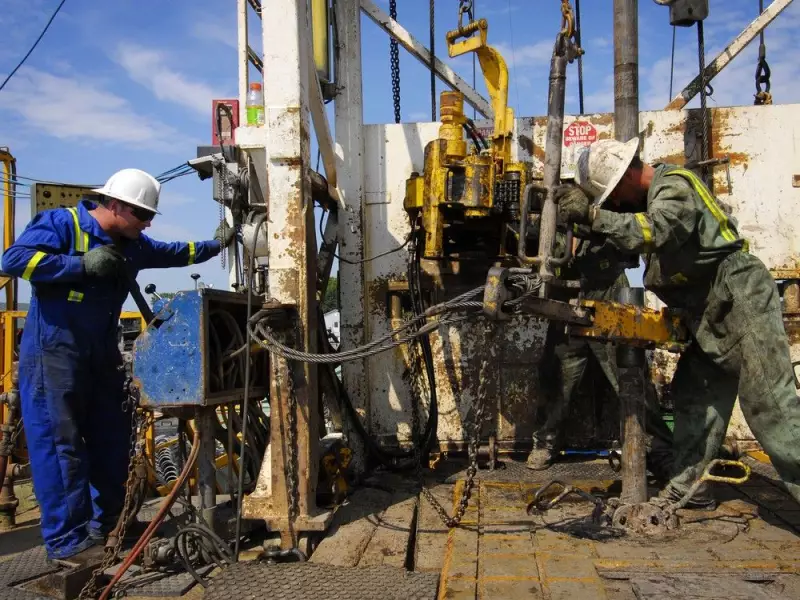
In a striking paradox that defines the modern energy landscape, Alberta's oil and gas industry eliminated approximately 10,000 jobs in 2025, even as the province's crude output surged to levels nearly seven times higher than those seen just over a decade ago.
Production Soars Amid Workforce Contraction
The numbers tell a compelling story of efficiency and technological transformation. While employment in the sector fell to around 140,200 workers by the end of last year, Alberta's oil production reached staggering heights. By November 2025, the province had produced close to 1.4 billion barrels of oil. This output dwarfs the roughly 122 million barrels produced in 2011, highlighting a dramatic increase in productivity per worker.
Mark Parsons, the chief economist at ATB Financial, offered a clear explanation for this trend. "The industry is finding ways to do more with less," Parsons stated in an interview. This shift towards greater operational efficiency, often driven by automation and digital technologies, has allowed companies to maintain and even grow output while managing labour costs.

Job Losses in Context of a Resilient Labour Market
The loss of 10,000 positions in a key industry would typically signal economic distress. However, economists point to a broader and surprisingly resilient provincial labour market. According to recent Statistics Canada data, Alberta's overall employment grew by 2.4 per cent in 2025, a rate that outpaced the national average.
This growth occurred despite significant challenges, including a swelling population that saw Alberta welcome more new residents than any other province. "It's a good thing that we were able to get that type of employment growth, because at the same time, we had strong population growth," Parsons noted. He added that creating enough jobs to match population influx has been a historical challenge for the province.
The provincial unemployment rate is forecasted to decline to approximately 6.5 per cent by 2026, as population growth begins to slow, allowing the job market to catch up.
Historical Perspective on Oil and Gas Employment
Joseph Marchand, founding director of the Alberta Centre for Labour Market Research at the University of Alberta, admitted the job cut figure was initially surprising. "It sounded 'like a hell of a lot,'" Marchand said. He referenced ongoing government discussions about pipelines and memoranda of understanding, which might have suggested a more stable employment picture.
However, when viewed through a longer lens, the 2025 employment level of 140,200 is consistent with historical averages for the sector. Statistics Canada data reveals that Alberta has employed an average of 144,185 oil and gas workers annually since 2005. This twenty-year perspective indicates that while the 10,000 job loss represents a significant personal and economic blow for affected workers and families, the sector's employment is now closer to its long-term norm after periods of higher staffing.
The overarching narrative from 2025 is one of a mature industry undergoing profound change. Alberta's oilpatch is demonstrating that it can achieve monumental production feats with a leaner workforce, a reality that reshapes the connection between energy output and job creation in Canada's most famous hydrocarbon-producing region.