

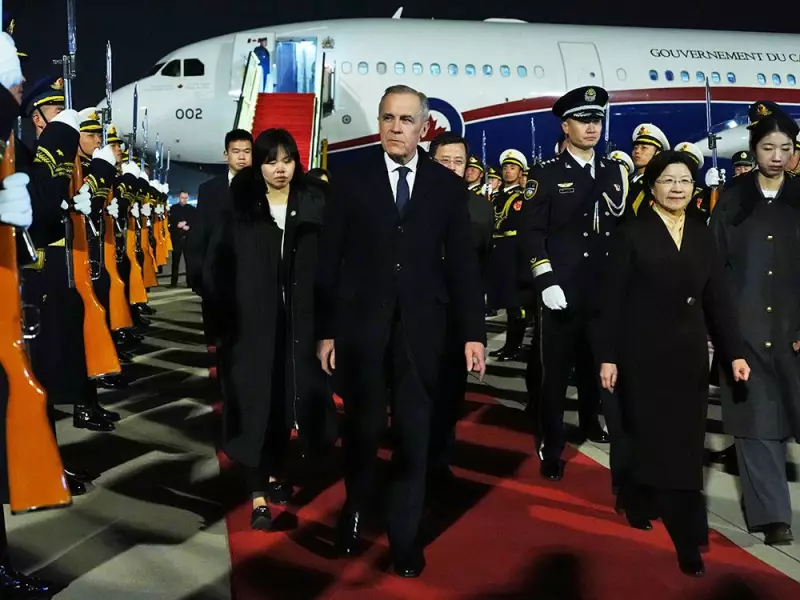
A significant shift in global diplomacy is underway, with world leaders embarking on a steady procession to Beijing. This movement comes in the wake of former U.S. President Donald Trump's aggressive tariff policies, which have unsettled traditional alliances and prompted nations to seek stability and opportunity directly with the world's second-largest economy.
A Parade of Diplomacy to Beijing
The trend began this month with South Korean President Lee Jae Myung, who cemented improved relations by becoming his country's first leader to visit China since 2019. Close on his heels was Canada's Prime Minister Mark Carney, who arrived in Beijing on Wednesday, January 14, 2026. His visit ends a near-decade-long gap in top-level diplomacy between Ottawa and Beijing, a significant thaw following the strained relations of the Trudeau era.
The diplomatic calendar remains full. British Prime Minister Keir Starmer is scheduled to travel to the Chinese capital soon, marking the first such UK visit since 2018. Furthermore, Germany's Chancellor, Friedrich Merz, is anticipated to make the journey next month.

Trump's Tariffs Trigger Diplomatic FOMO
This flurry of activity follows months where Trump's tariff war dominated the agenda of U.S. allies. While a tariff truce was sealed between Washington and Beijing in October 2025, temporarily easing tensions, the unpredictable nature of the policy has left other nations wary of being sidelined.
"Trump is triggering diplomatic FOMO across the Western world," observed Neil Thomas, a fellow for Chinese politics at the Asia Society Policy Institute's Center for China Analysis. "His approach leaves leaders eager to engage Xi so they aren't sidelined by U.S.-China maneuvering."
This sentiment is underscored by the planned meetings between Xi Jinping and Trump, who are slated to meet four times this year. An April summit could make Trump the fifth G7 leader to visit China in just six months—provided his latest tariff threats do not derail the current detente.
Securing Critical Minerals and Navigating Tensions
Beyond mending political fences, foreign leaders have a pressing economic reason to visit: securing access to critical minerals. China is the dominant global supplier of rare earths and other vital materials. The October 2025 U.S.-China trade pact included a one-year suspension of tighter Chinese export controls on some of these minerals, a deal Trump hailed as a global win.
However, Western economies are not leaving their supply chains to chance. During a December trip, German Foreign Minister Johann Wadephul reported progress, stating Beijing indicated a constructive approach to handling European orders for these crucial metals. The concern is so acute that G7 finance ministers met in Washington on Monday, January 12, 2026, specifically to discuss strategies to "address vulnerabilities in critical minerals supply chains."
Simultaneously, Beijing is leveraging this diplomatic moment for strategic gains. During the South Korean president's visit, China's Commerce Ministry unveiled export curbs targeting Japan. This move appeared designed to isolate Japanese Prime Minister Sanae Takaichi, whose comments on a potential military response to a Taiwan contingency angered Beijing. President Lee was quick to clarify that ties with both Asian powers were equally important to Seoul.
The changing landscape is also visible in technology policy. In a notable shift, the Trump administration this week moved closer to allowing Nvidia Corp. to sell more advanced semiconductors to China, a contrast to the previous Biden administration's efforts to build a coalition restricting Beijing's access to cutting-edge chips.
As Prime Minister Carney engages in talks aimed at landing commercial deals for Canada, his journey reflects a broader recalculation. In a world order shaken by unilateral American trade actions, engaging directly with China is no longer just an option but a perceived necessity for economic security and diplomatic influence.






