

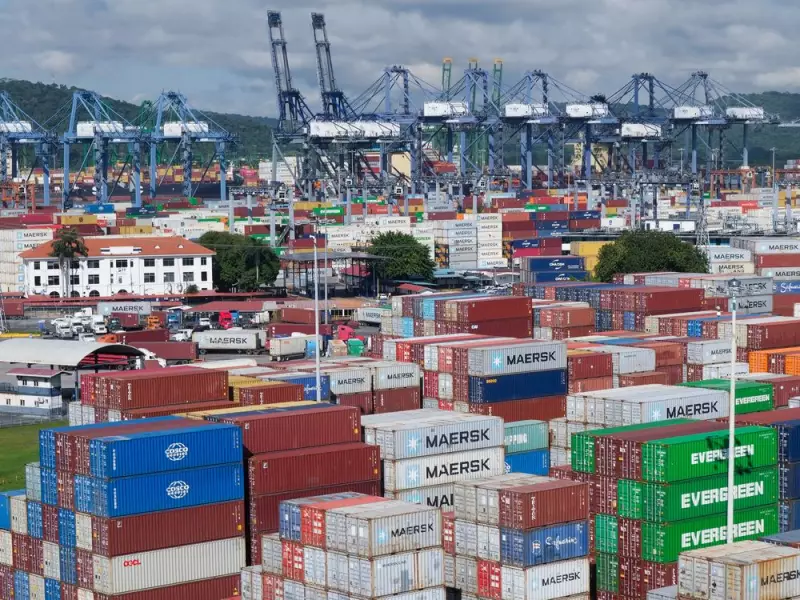
The global trading system, having just concluded one of its most transformative years in recent memory, is now bracing for another period of instability and uncertainty in 2026. While merchandise trade showed surprising resilience through 2025, experts warn that the coming year will be defined by the consequences of widespread tariff actions, particularly those initiated by the United States.
The Shifting Currents Beneath the Surface
Data from shipping industry veteran John McCown reveals a complex picture. Global container volumes managed to grow by 2.1 per cent in October 2025 compared to the previous year. However, this headline figure masks significant regional shifts. While imports into Africa, the Middle East, Latin America, and India saw robust growth, the United States experienced a sharp eight per cent contraction in inbound volumes.
McCown notes that global supply chains are already rapidly adapting. This is a stark reversal from 2024, which saw a 15.2 per cent surge in U.S. container imports. "To say that the annual total for 2025 will be in diametric contrast is an understatement," he wrote. In a succinct summary of the situation, McCown stated that if 2025 was the year of the tariff, then 2026 will be the year of tariff consequences.

Key Flashpoints for the Coming Year
Analysts point to several critical issues that will shape global trade in 2026, with four standing out as particularly consequential.
The Looming CUSMA Review
A major focus will be the six-year review of the Canada-United States-Mexico Agreement (CUSMA), set to begin soon. U.S. Trade Representative Jamieson Greer told lawmakers this month that the negotiations will venture into "new territory," given the novelty of the early review clause. The U.S. government received over 1,500 responses during its public comment period.
While many stakeholders expressed support for extending the deal, Greer noted that "virtually all stakeholders also called for some sort of improvement." Any gain for one member of the trade bloc, however, could come at the expense of another, setting the stage for difficult talks. Relations are already strained, notably after former President Donald Trump terminated trade talks with Canada in October 2025.
Potential for Supply Chain Snarls
For the container ships that form the backbone of global commerce, 2026 may bring developments that sound positive but could actually trigger significant disruptions. Experts, including Lars Jensen, CEO of Vespucci Maritime, warn that these potential shocks could snarl global supply chains in a manner reminiscent of the COVID-19 pandemic era.
The rewiring of global trade routes away from the United States and toward other regions is a primary cause for concern. This large-scale reconfiguration, driven by policy and tariffs, introduces new vulnerabilities and inefficiencies into a system that relies on predictability.
Navigating a New Trade Landscape
The cumulative effect of these factors points to a challenging year ahead for businesses, policymakers, and consumers reliant on smooth international trade. The resilience shown in 2025 is likely to be tested as the full impact of tariff policies materializes, supply chains undergo further stress from reconfiguration, and key trade partnerships like CUSMA enter a period of potentially contentious review.
The data indicates that the world is not trading less, but rather trading differently. The success of economies in 2026 will depend heavily on their ability to adapt to these rapidly shifting patterns and navigate the political headwinds that are reshaping the global economic map.






