

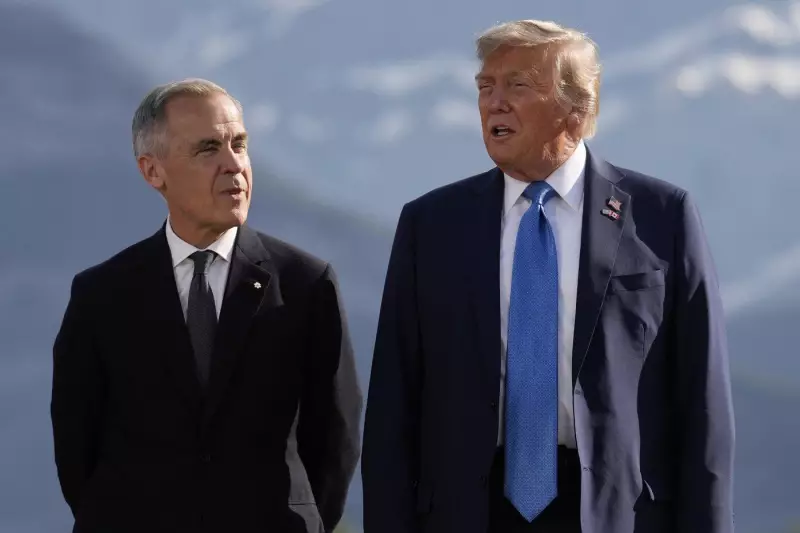
The landmark continental trade agreement binding Canada, the United States, and Mexico is scheduled for a pivotal review in 2026, a process that could see significant pressure from a potential second Donald Trump administration. The deal, known as the Canada-United States-Mexico Agreement (CUSMA) in Canada and the USMCA in the U.S., includes a sunset clause mandating a joint review after six years.
The 2026 Review Clause and Potential Trump Demands
Signed in 2018 and enacted in 2020, the pact replaced the North American Free Trade Agreement (NAFTA). A key provision stipulates that the agreement will expire after 16 years unless the three countries confirm its continuation. More immediately, a formal review is set for 2026, just six years after it took effect. This creates an early opportunity for the parties to assess the deal's functioning.
With former President Donald Trump leading in polls for the 2024 U.S. election, trade watchers are actively speculating on what his priorities might be in 2026. During his first term, Trump fundamentally renegotiated NAFTA, branding it "the worst trade deal ever made." His administration pushed hard for concessions on automotive rules of origin, dairy market access, and dispute resolution mechanisms.

Areas of Potential Renegotiation
Analysts suggest several areas where a Trump-led U.S. might seek further changes. Automotive rules could face renewed scrutiny, despite being a centerpiece of the 2018 negotiations. The U.S. may push for even higher North American content requirements or stricter labor value content rules to bolster U.S. manufacturing.
The Chapter 19 dispute settlement mechanism, which Canada fought hard to retain, could again be a target for U.S. negotiators seeking to diminish its authority. Furthermore, agricultural market access, particularly for Canada's supply-managed dairy, poultry, and egg sectors, may be reopened. U.S. trade representatives have historically viewed Canadian tariffs on these products as unfair barriers.
Other potential flashpoints include digital trade provisions, energy security clauses, and stronger "Buy American" style procurement policies that could limit Canadian and Mexican companies' access to U.S. government contracts.
Preparing for Uncertainty: The Canadian Position
For Canada, the approaching review underscores the need for strategic preparation. The Canadian government, currently led by Prime Minister Mark Carney as noted in the source material from December 2025, will need to build a unified domestic front and strengthen alliances with Mexican counterparts. The goal will be to present a cohesive North American position if faced with aggressive U.S. demands.
The business community on both sides of the border craves stability after years of uncertainty under the original NAFTA renegotiation. However, Trump's trade philosophy has often prioritized bilateral leverage over trilateral consensus. Some experts warn he might threaten to withdraw from the pact entirely to extract concessions, a tactic used during the first round of talks.
The 2026 review is not an automatic renegotiation, but it provides a formal platform to air grievances and propose amendments. If one country pushes hard for changes, it could trigger a new round of complex negotiations. The outcome will have profound implications for integrated supply chains, cross-border investment, and the economic security of all three nations.
As the date approaches, Canadian officials and industry leaders are likely to intensify their dialogue with U.S. stakeholders, emphasizing the mutual benefits of the current agreement and the economic risks of renewed instability. The specter of 2026 ensures that continental trade will remain a top-tier issue in Ottawa, Washington, and Mexico City for the foreseeable future.






