

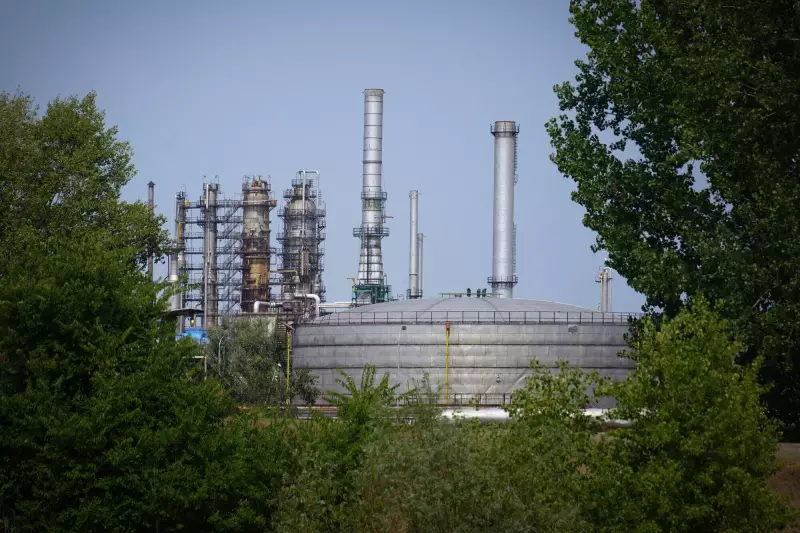
The United States government has issued a temporary reprieve from sanctions to Naftna Industrija Srbije AD (NIS), a major Serbian oil and gas company controlled by Russia's Gazprom Neft. The decision, announced on December 31, 2025, provides a crucial lifeline to the firm and underscores the complex geopolitical balancing act in the Balkans.
Details of the Sanctions Waiver
The temporary waiver allows NIS, a subsidiary of Gazprom Neft PJSC, to continue certain operations without facing the full brunt of U.S. sanctions imposed on Russian energy entities. This move is seen as a strategic concession to Serbia, a European nation that has maintained closer ties with Moscow than its EU-aspiring neighbors. The refinery in Novi Sad, Serbia, a key asset operated by NIS, remains central to the country's energy security.
Analysts suggest this decision reflects Washington's pragmatic approach to regional stability. By granting this limited relief, the U.S. aims to prevent a severe economic shock in Serbia that could destabilize the region, while maintaining overall pressure on Russia's energy export capabilities. The specific duration and conditions of the temporary reprieve were not immediately detailed in the initial announcement.

Geopolitical Context and Implications
This development occurs within a fraught geopolitical landscape. Serbia, while formally seeking European Union membership, has refused to align with Western sanctions against Russia. The country remains heavily dependent on Russian energy, with NIS serving as a critical piece of infrastructure. The U.S. decision can be interpreted as an acknowledgment of Serbia's difficult position and an effort to avoid pushing Belgrade further into Moscow's orbit.
The timing of the announcement, on New Year's Eve, is also notable. It may have been strategically chosen to minimize immediate political fallout or market reactions. The waiver highlights the ongoing challenge for Western nations in enforcing a unified sanctions regime against Russia, as national and regional interests sometimes necessitate exceptions.
Reactions and Future Outlook
Reactions from the region are anticipated to be mixed. Officials in Belgrade are likely to welcome the decision as a victory for diplomacy and a recognition of Serbia's unique circumstances. Conversely, some EU and NATO allies may view it as a dilution of the sanctions strategy. The long-term implications for Serbia's energy diversification and its EU accession talks remain uncertain.
This temporary reprieve does not signify an end to sanctions pressure on Russian-controlled entities. Instead, it represents a calibrated, time-limited exception. The situation will require close monitoring to see if it leads to broader negotiations regarding Serbia's energy ties or if it remains a singular, pragmatic exception in the ongoing geopolitical standoff.






