

U.S. Hosts Global Summit to Challenge China's Critical Minerals Supremacy
For months, the United States and its key trading partners have been quietly developing a coordinated strategy to reduce their collective dependence on China for essential minerals. This effort culminated in a significant diplomatic gathering this week, where American officials presented a comprehensive plan to reshape global supply chains.
Washington Summit Draws International Participation
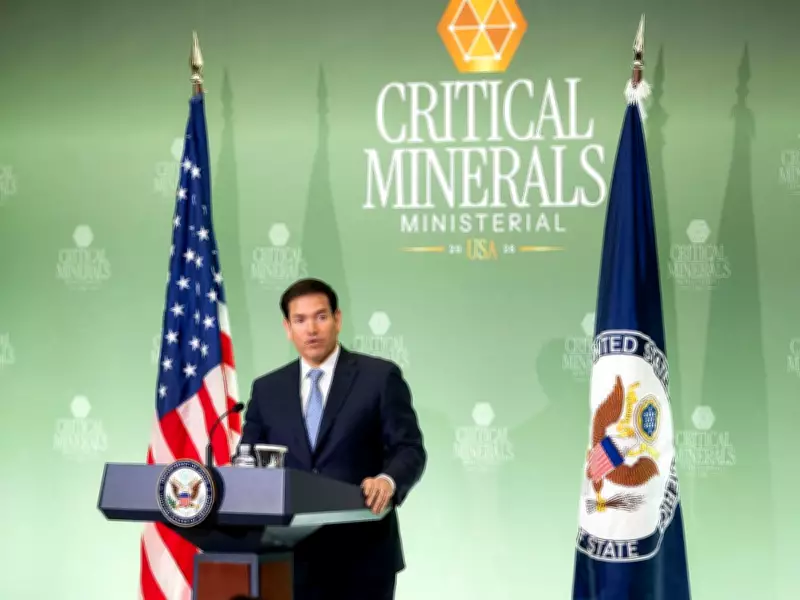
The Trump administration welcomed representatives from 55 nations to a critical minerals summit at the State Department on Wednesday. The gathering served as a platform for the U.S. to propose minimum price guarantees and encourage substantial private equity investment from American sources. The primary objectives are clear: diminish reliance on Chinese-controlled resources and ensure stable access for U.S. manufacturers to these vital materials.
Vice President JD Vance set the tone in his opening remarks, stating, "Today, the international market for critical minerals is failing. Consistent investment is nearly impossible, and it will stay that way so long as prices are erratic and unpredictable." He urged foreign officials to collaborate in creating stable investment conditions and proposed establishing a "preferential trade centre for critical minerals protected from external disruptions."

International Agreements and Policy Coordination
The European Union, Japan, and Mexico each reached separate agreements with the United States to implement new policies, including establishing price floors to address vulnerabilities in critical mineral supply chains. These commitments were formalized through statements from the U.S. Trade Representative's office.
Each participating nation also pledged to work toward a binding multilateral trade agreement specifically focused on critical minerals. This represents a significant step toward creating a coordinated international framework that could eventually function as a trading bloc to counterbalance China's market dominance.
Canada's Role in the Global Minerals Landscape
Canada participated in the summit through Foreign Affairs Minister Anita Anand, reflecting the country's strategic position in critical minerals development. Under Canadian leadership last year, the G7 launched a critical minerals action plan that shares similarities with the initiatives announced at Wednesday's gathering.
Canadian officials have emphasized collaboration on critical minerals in discussions with their Washington counterparts, particularly as both countries prepare for a mandatory review of the Canada-U.S.-Mexico trade agreement later this year. Additionally, Canada and the U.S. Department of Defense already maintain a co-investment arrangement designed to accelerate Canadian mining development and strengthen critical minerals supply chains.
The Scale of China's Market Dominance
Critical minerals encompass a broad category of resources, while rare earths specifically refer to 17 elements essential for electronics and other high-tech industries. Although Canada possesses some of the world's largest known reserves of rare earth metals, China remains the undisputed leader in both production and refining capacity.
According to data from the Paris-based International Energy Agency, China controls more than 90 percent of global rare earths and permanent magnets refining capacity. Malaysia ranks a distant second with just 4 percent. This concentration has become increasingly concerning as artificial intelligence expansion drives unprecedented demand for critical minerals used in data centers and high-performance chips.
Under Secretary of State for Economic Affairs Jacob Helberg provided context during a pre-summit briefing with reporters on Tuesday, noting, "Everything is geographically concentrated in China, which really isn't a value judgment — it's an objective fact. Ultimately, countries want to diversify and de-risk the supply chain, which inherently means de-risking single points of failure."

The summit represents a coordinated international response to what many nations perceive as an over-reliance on a single source for materials essential to modern technology, national security, and economic stability. As global demand for these resources continues to grow, the initiatives launched this week could significantly reshape international trade patterns and supply chain security for years to come.





