

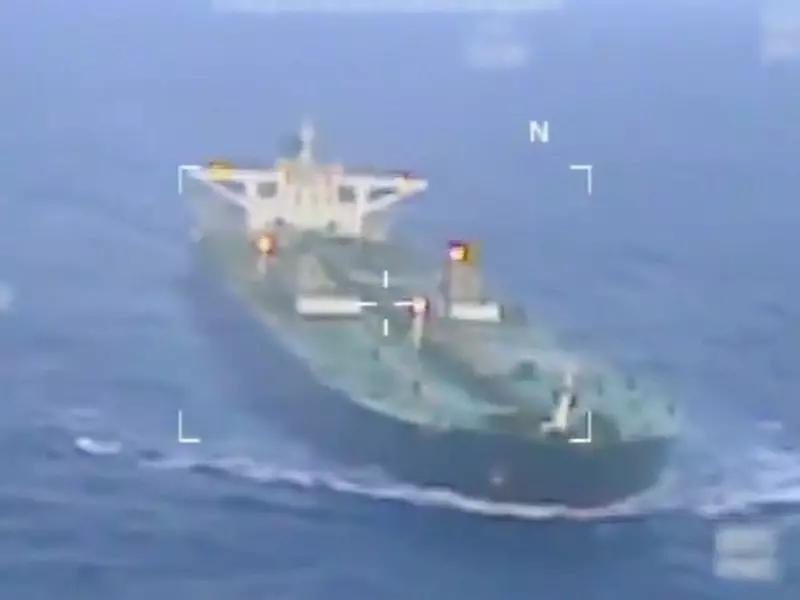
The United States has intensified its economic pressure campaign on Venezuela, boarding a second oil tanker in as many days near the South American nation's coast. This latest action marks a significant escalation in President Donald Trump's efforts to blockade the regime of Nicolás Maduro by choking off its primary source of revenue: crude oil exports.
Details of the Latest Interdictions
According to sources familiar with the operations, U.S. authorities boarded the Bella 1 tanker, a Panamanian-flagged vessel already under U.S. sanctions, as it was en route to Venezuela to load crude oil. This interdiction, reported on December 21, 2025, follows closely on the heels of the apprehension of the Centuries supertanker in a pre-dawn operation on December 20.
The boarding of the Centuries was particularly notable because the ship was not publicly listed on U.S. sanctions rosters. The tanker, also flying a Panamanian flag with its oil title held by a Chinese company, was found to be carrying sanctioned oil from Venezuela's state-owned company, Petróleos de Venezuela SA (PDVSA). White House spokeswoman Anna Kelly confirmed this detail in a social media post.

These incidents bring the total known tanker boardings to at least three in recent weeks, including the Skipper on December 10. The U.S. Coast Guard, with support from the Department of War, carried out the operation against the Centuries, as shown in a video released by U.S. Secretary of Homeland Security Kristi Noem.
Venezuela's Response and Mounting Pressure
Venezuelan Vice President and Oil Minister Delcy Rodriguez condemned the seizure of the Centuries tanker in strong terms, labeling it "a serious act of piracy" and "the theft and kidnapping" of the vessel by the U.S. government. Despite the blockade, Rodriguez claimed over the weekend that the country's oil production had met the government's target of 1.2 million barrels per day.
However, industry experts warn the physical and deterrent effects of the U.S. blockade are creating a critical situation on the ground. Evanan Romero, an oil adviser to Venezuelan opposition leader Maria Corina Machado, stated that PDVSA is rapidly filling its storage tanks and even using cabotage vessels meant for short internal hauls.
"It's a matter of days before production starts shutting down," Romero, a Houston-based veteran of Venezuela's oil industry, warned. He predicted that a collapse in production could trigger widespread social unrest as the national currency plummets and access to basic goods like food becomes even more difficult for citizens.
Expert Analysis: A Potential Total Stoppage
Analysts monitoring the situation believe the escalated U.S. actions could have severe and immediate consequences for Venezuela's oil sector. Kevin Book, managing director at Washington-based ClearView Energy Partners, noted that while the first seizure focused minds in Caracas, subsequent interceptions could rapidly winnow export volumes.
"Even before the blockade, the U.S. armada may have pared export volumes by deterring outbound ships and curtailed heavy oil production by blocking inbound tankers carrying diluent," Book explained. The blockade threatens to cut off imports of lighter diluent, which is essential for facilitating the flow of Venezuela's heavy crude.
The most stark warning comes from Schreiner Parker, a partner and head of emerging markets at Oslo-based Rystad Energy. He argued that modern surveillance technology leaves tankers with little room to evade detection.
"Oil tankers are not the blockade runners of old, and with the advanced radar and satellite technologies available to the U.S. Navy, simply turning off a transponder or using a false flag won't be sufficient to evade detection," Parker said. "This means the Trump blockade could ostensibly result in a total stoppage of Venezuela’s crude exports."

The Trump administration has previously designated the Maduro government as a foreign terrorist organization, accusing it of drug trafficking. U.S. officials have brushed aside concerns that the blockade and resulting drop in Venezuelan supply could impact global oil prices. The White House did not immediately respond to requests for comment on the latest boarding.





