

UK and China Pursue Enhanced Partnership as Trump's Policies Reshape Global Landscape
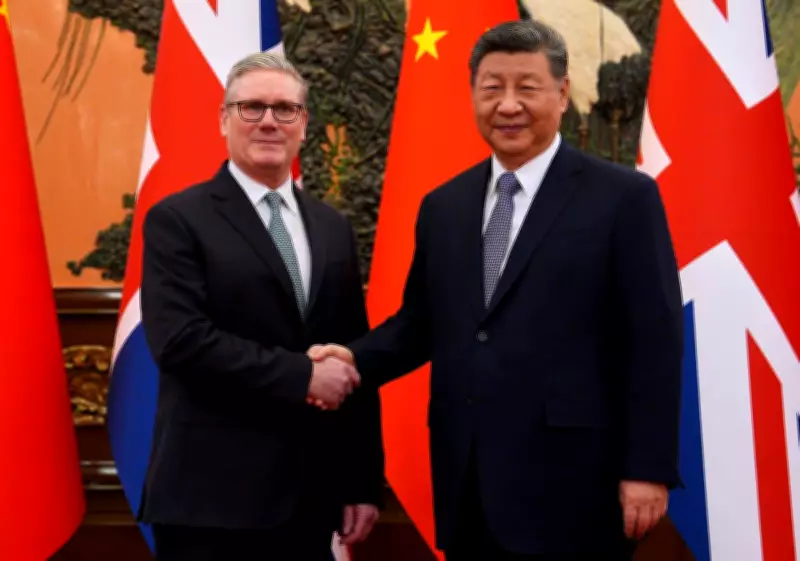
In a significant diplomatic move, British Prime Minister Keir Starmer and Chinese President Xi Jinping convened in Beijing on Thursday, January 29, 2026, to discuss strengthening ties between the United Kingdom and China. This high-level meeting underscores a mutual desire for deeper economic and political cooperation at a time when global relations are being notably influenced by the trade policies of former U.S. President Donald Trump.
A Strategic Dialogue Amidst International Uncertainty
The bilateral talks between Starmer and Xi focused on expanding collaboration in areas such as trade, investment, and climate initiatives. This engagement reflects the UK's ongoing efforts to forge robust international partnerships post-Brexit, while China aims to solidify its global economic influence. The timing is particularly poignant, as Trump's recent tariff announcements have introduced new volatility into worldwide markets, prompting nations to reassess their diplomatic and economic strategies.
Observers note that the UK-China relationship has experienced fluctuations in recent years, but this meeting signals a potential thaw and a shared interest in stabilizing bilateral relations. Starmer emphasized the importance of constructive dialogue and mutual respect during the discussions, highlighting opportunities for joint ventures in technology and green energy sectors.

Global Context: Trump's Tariffs and Their Ripple Effects
Concurrently, Donald Trump's tariff policies continue to send shockwaves through the global economy. His approach, characterized by aggressive trade measures, has compelled countries to navigate an increasingly fragmented international trade environment. For Canada and other nations, these developments necessitate careful diplomatic maneuvering to protect economic interests and maintain strategic alliances.
The juxtaposition of Starmer and Xi's cooperative overtures with Trump's disruptive trade actions illustrates a broader trend of shifting geopolitical alignments. As major powers recalibrate their foreign policies, smaller economies face heightened uncertainty, underscoring the need for agile and proactive governance.
Implications for International Cooperation
This evolving scenario raises important questions about the future of multilateralism and global governance. The UK-China dialogue may serve as a model for bilateral engagement that prioritizes pragmatic cooperation over ideological divisions. However, the persistent influence of Trump's tariffs reminds stakeholders of the ongoing challenges in achieving consensus on international trade norms.
For Canadians, these developments highlight the interconnected nature of global affairs, where decisions made in Washington, London, or Beijing can have direct repercussions on domestic policies and economic stability. As such, monitoring these diplomatic exchanges and trade policies remains crucial for anticipating potential impacts on Canada's own international relations and economic strategies.






