

Trump's Tariff Warning Confirms Carney's Davos Analysis on Economic Leverage
In a striking validation of Mark Carney's recent Davos commentary, former U.S. President Donald Trump has threatened to impose 100% tariffs on Canadian goods if Canada pursues a free trade agreement with China. This development, occurring just four days after Carney's World Economic Forum address, provides compelling evidence that major powers are increasingly using economic integration as strategic weapons.
The Davos Warning and Subsequent Confirmation
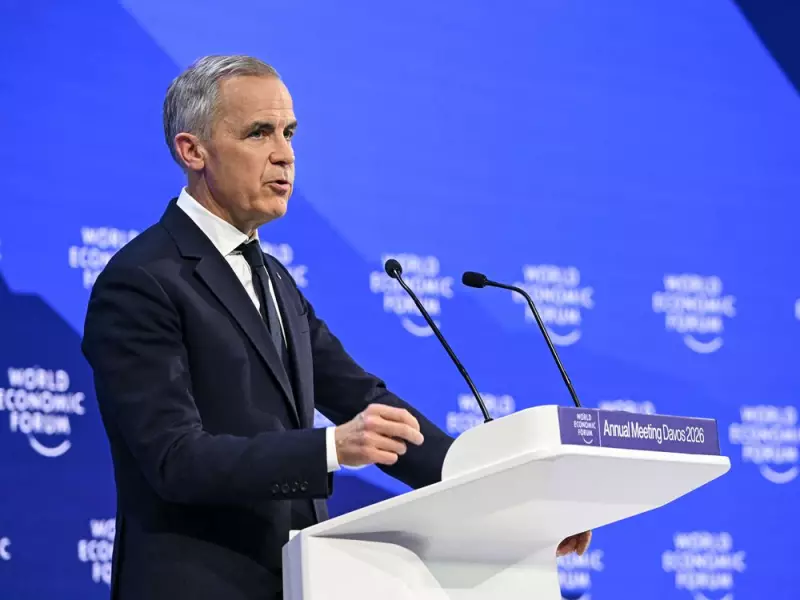
On Tuesday, January 27, 2026, former Bank of Canada governor Mark Carney told a Davos audience that "great powers" have begun "using economic integration as weapons" and "tariffs as leverage." By Saturday, Trump responded with his tariff threat against Canada, creating what appears to be a textbook example of Carney's analysis in action.
The timing and substance of Trump's announcement strongly support Carney's central thesis about shifting global economic dynamics. While Canada is not currently seeking a free-trade deal with China, Trump's preemptive warning demonstrates how tariff threats can be deployed to influence other nations' economic policies.

Examining the Logic Behind the Tariff Threat
Trump's stated concern revolves around the possibility that Canada could become a "Drop Off Port" for Chinese goods entering the United States. However, this fear appears misplaced for several reasons:
- The Canada-United States-Mexico Agreement (CUSMA) includes detailed "rules of origin" that prevent third-party backdoor plays
- Chinese goods crossing the Canada-U.S. border would still be subject to U.S. tariff rates for Chinese products
- Article 32.10 of CUSMA allows members to terminate the agreement if another member enters a free-trade deal with a non-market country
Despite these existing safeguards, Trump's threat represents a clear attempt to influence Canadian foreign policy through economic pressure.
The Broader Implications for International Trade
This episode highlights a significant departure from traditional rules-based trade principles that have governed international commerce for decades. Historically, the "most-favoured nation" principle and "bound tariffs" created stability by preventing arbitrary tariff increases and ensuring equal treatment among trading partners.
Trump's approach represents a return to bilateral pressure tactics that undermine these established norms. The incident raises important questions about whether economic leaders should speak out against such practices or maintain diplomatic silence to avoid retaliation.
Carney's decision to address these issues publicly, despite potential consequences, reflects a commitment to transparent economic discourse. His respectful but firm commentary at Davos exemplifies what it means to "speak truth to power" in an era when economic tools are increasingly weaponized.
Navigating the New Economic Reality
The exchange between Carney and Trump illustrates the challenging environment facing middle powers like Canada. As great powers increasingly use economic measures as leverage, smaller nations must navigate between maintaining sovereignty and avoiding punitive measures.
This situation also demonstrates how domestic political considerations in one country can directly impact the economic policies of its neighbors. The threat against Canada appears driven more by U.S. domestic politics and Trump's personal approach to trade than by any imminent Canadian policy shift toward China.
The episode serves as a reminder that in today's interconnected global economy, economic statements and threats can have immediate international consequences, requiring careful navigation by all nations involved.






