

U.S. President Donald Trump has declared the cornerstone North American trade agreement "irrelevant to me" and signalled his intent to pursue separate deals with Canada and Mexico, casting significant uncertainty over the future of continental commerce as a mandatory review looms.
Trump's Dismissal of the Trilateral Pact
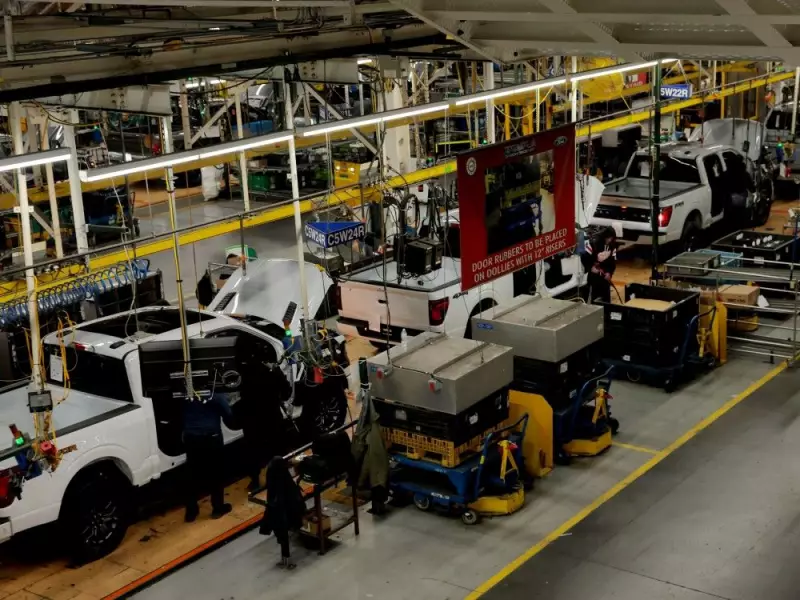
During a visit to a Ford manufacturing plant in Dearborn, Michigan on Tuesday, January 13, 2026, Trump was questioned about the Canada-United States-Mexico Agreement (CUSMA), which he signed in 2020 to replace NAFTA. The pact is scheduled for a six-year review in 2026, with an option to extend it for another 16 years.
"I want to see Canada and Mexico do well, but the problem is we don’t need their product," Trump stated. He specifically targeted the automotive sector, a pillar of integrated North American manufacturing. "I want to build cars here, not in Canada," he said, adding that the United States does not need vehicles or other products from its northern neighbour.

Trump downplayed the agreement's value, saying there was no "real advantage to CUSMA" for the U.S., but conceded, "Canada would love it. Canada wants it. They need it."
Industry and Government Pushback
The president's comments stand in stark contrast to the position of major automakers. In November 2025, the Big Three—General Motors, Ford, and Stellantis—along with Tesla, Toyota, Honda, and Hyundai, urged the U.S. administration to extend CUSMA. They argued in filings that the integrated supply chain under the pact delivers critical cost efficiencies and enables global competitiveness.
The American Automotive Policy Council emphasized that the agreement "enables automakers operating in the U.S. to compete globally through regional integration."
On the Canadian side, preparations for the review are underway. Minister of Internal Trade Dominic LeBlanc recently met with dairy and aluminum sector leaders in Montreal to gather input. Furthermore, Prime Minister Mark Carney is set to host the premiers later in January to discuss a unified national strategy ahead of talks.
The Path Forward: Bilateral Deals on the Table
Trump's preference aligns with statements from his trade team. In December 2025, U.S. Trade Representative Jamieson Greer told an Atlantic Council event that "all options are on the table," including bilateral agreements. Greer reasoned that the U.S. economic relationships with Canada and Mexico are distinct, with differences in labour, import-export profiles, and rule of law, making separate negotiations logical.
The stakes for Canada are substantial. In 2024, U.S. imports from Canada totalled $584 billion, including vehicles and parts, energy products like oil and natural gas, critical metals, and lumber. The formal review process is expected to begin with a meeting of the Free Trade Commission on July 1, 2026.
Trump's unequivocal stance sets the stage for what could be a complex and contentious renegotiation, challenging the deeply intertwined economic foundations that have defined North American trade for decades.






