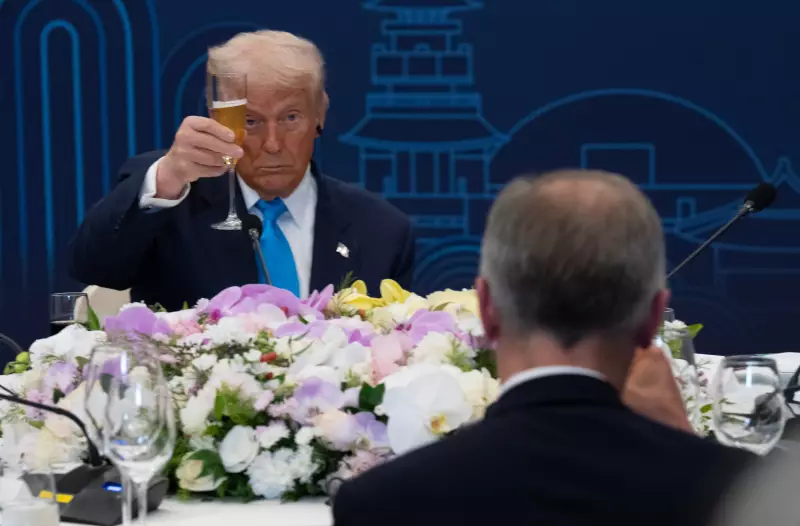
In a development that could significantly impact North American trade, U.S. Trade Representative Greer has indicated to Politico that President Donald Trump could decide as early as next year to withdraw the United States from the Canada-United States-Mexico Agreement (CUSMA).
Legal Grounds for Termination Despite Expiration Claims
The report, published on December 4, 2025, highlights a critical debate over the trade pact's status. While President Trump has publicly stated the deal is about to expire, international trade lawyer Robert Glasgow clarifies this is factually incorrect. However, Glasgow confirms that the U.S. President holds the power to elect to terminate the agreement, a separate action from it reaching an expiration date.
This distinction is crucial for Canadian policymakers and businesses. The potential for a unilateral withdrawal by the U.S. administration introduces a new layer of uncertainty for the trilateral trade framework that governs billions in annual commerce.

Implications for Canada's Economy and Trade Policy
A U.S. withdrawal from CUSMA would force Canada and Mexico into immediate and complex negotiations to salvage key aspects of their trade relationship with their largest partner. Sectors from automotive and agriculture to energy and manufacturing, which have built integrated supply chains under the agreement, would face profound disruption.
The mere suggestion of withdrawal, even if not acted upon, is likely to create market volatility and deter investment decisions that rely on stable trade rules. It places the Canadian government in a position where it must prepare contingency plans while publicly advocating for the agreement's preservation.
A Recurring Theme in U.S. Trade Policy
The threat to leave major trade deals was a hallmark of Trump's first term, which saw the renegotiation of NAFTA into CUSMA. The latest comments from the U.S. Trade Representative suggest a potential return to this confrontational trade strategy if Trump secures a second term.
Experts like Glasgow are now tasked with parsing the political rhetoric from the legal mechanisms. While the "expiration" claim may be inaccurate, the termination clause within CUSMA provides a clear, if drastic, path for the U.S. to exit, requiring six months' notice to its partners.
As 2026 approaches, this issue is poised to become a central concern for Canadian trade officials, who must navigate the possibility of a fundamental shift in the continent's economic architecture.