

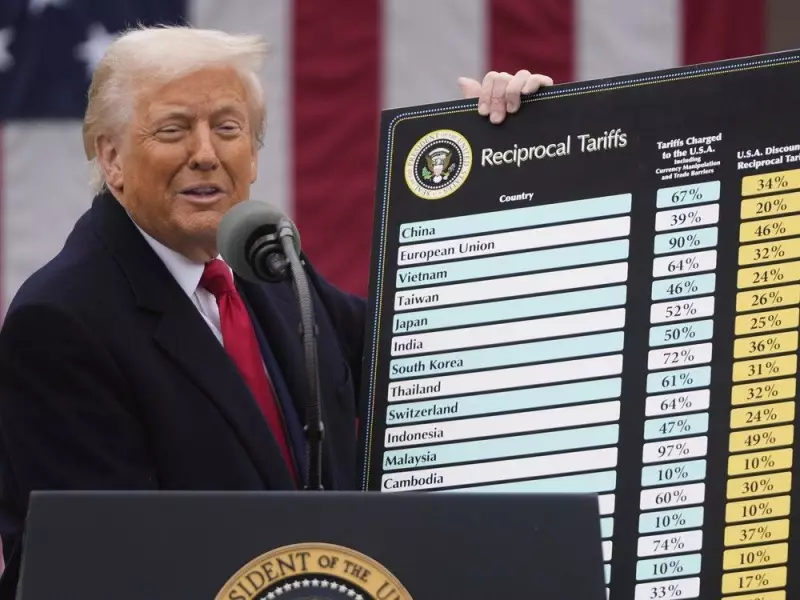
A pending Supreme Court decision regarding former President Donald Trump's use of tariff powers could provide significant economic protection for Alberta, according to trade analysts. The case centers on whether the International Emergency Economic Powers Act (IEEPA) gives the president unconstitutional authority to impose tariffs.
Understanding the Legal Battle Over Tariff Powers
The Supreme Court is currently examining whether President Trump's application of IEEPA to implement tariffs represents an overreach of executive power. This specific delegation of authority has enabled what experts describe as "any item, any country, any amount, any time, any duration, for any reason" tariffs that can be changed at the president's discretion.
If the court rules this use unconstitutional and the administration respects the decision, the president would need to rely on other established tariff authorities that remain unchallenged legally. The most commonly used alternative is Section 232 national security tariffs, which have previously targeted Canadian steel, aluminum, and approximately a dozen other products including trucks, wind turbines, copper, and pharmaceuticals.

Why Alberta Stands to Benefit
Alberta's economic advantage in this scenario stems from the fundamental differences between IEEPA tariffs and Section 232 tariffs. While IEEPA allows virtually any export to be tariffed immediately, Section 232 requires a more deliberate process.
Section 232 tariffs cannot be implemented "by tweet" and must target specific, coherent product categories following formal investigations. This procedural requirement means only regions producing items subject to Section 232 tariffs would face immediate threat, rather than the entire Canadian economy being vulnerable to arbitrary tariffs.
Broader Implications for Canadian Trade
The elimination or limitation of IEEPA tariff authority would shift the trade threat landscape significantly across Canada. Other provinces with economies dependent on manufacturing and exports currently subject to Section 232 tariffs would continue facing challenges, while Alberta's key industries might enjoy greater stability.
Although the list of items subject to Section 232 tariffs could expand over time, the requirement for specific investigations and product identification provides Canadian businesses with more predictability and preparation time compared to the sudden imposition possible under IEEPA.
The Supreme Court's decision, expected to come after November 14, 2025, could fundamentally reshape how U.S. presidents exercise trade powers and which Canadian regions bear the brunt of future tariff actions.






