

Supply Management Puts Canada's Mercosur Trade Deal at Risk
Canada's supply management system, which protects domestic poultry and dairy industries, is once again threatening to derail a significant international trade opportunity. This time, the potential casualty is a free trade agreement with the Mercosur trading bloc, comprising Argentina, Bolivia, Brazil, Paraguay, and Uruguay.
The Political Reality of Protectionism
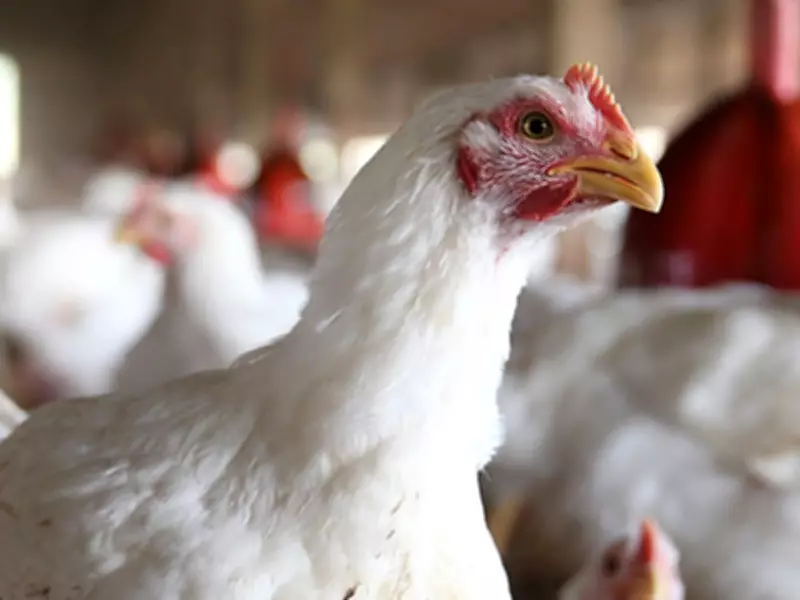
Just as turkeys would never vote for their own Christmas dinner, Canadian chicken farmers cannot reasonably be expected to support trade liberalization with the world's largest poultry exporter. The chicken sector operates under Canada's supply-managed system, which shields it from most foreign competition under the banner of domestic food security, while also ensuring substantial profits for producers.
The domestic political consensus on supply management appears unshakeable, with all major political parties competing to demonstrate their loyalty to dairy and poultry industries. This commitment reached new heights last summer when Parliament passed Bill C-202, which legally prohibits the federal government from making further concessions on supply management during international trade negotiations.

The Mercosur Opportunity
The House of Commons international trade committee recently examined the prospects of a deal with Mercosur, a market representing 282 million people and a combined economy worth approximately US$3 trillion, making it the world's fifth largest economic bloc.
Currently, Canada's trade relationship with Mercosur is remarkably underdeveloped. Canadian exports to the region total just $3 billion annually, representing a mere 0.3 percent of Canada's $780 billion in total exports. Meanwhile, Canada imports around $13 billion worth of goods from Mercosur countries, including gold, aluminum oxide, sugar, coffee, beef, and wine.
The potential for growth is substantial. Canadian exports of fertilizers already account for one-quarter of all exports to the region by value, with additional opportunities in fuels, pharmaceuticals, and aircraft parts.
The Chicken Farmer Opposition
Tim Klompmaker, chair of the Chicken Farmers of Canada, presented the industry's perspective to the parliamentary committee. He emphasized that under previous trade agreements like the Trans-Pacific Partnership and the Canada-U.S.-Mexico Agreement, Canada has already granted concessions on 10.8 percent of market access, equivalent to 129.6 kilograms.
"A potential agreement with Mercosur presents an even greater risk," Klompmaker warned, noting that Brazil is the world's largest chicken exporter. Canadian chicken imports from Brazil already reached 10.7 million kilograms in 2025, making Brazil the second largest source of imported chicken after the United States.
"The scale, combined with lower production costs and expanding global reach, creates disproportionate pressure on Canadian producers," Klompmaker argued. The chicken farmers' organization insists Canada must avoid any expansion of tariff-rate quotas beyond existing commitments, effectively creating a veto over progress on a Mercosur free trade deal.
The Broader Implications
This situation highlights the ongoing tension between Canada's protectionist agricultural policies and its broader trade ambitions. While supply management protects approximately 2,800 chicken farmers (60 percent of whom are in Ontario and Quebec), it potentially limits Canada's ability to secure advantageous trade agreements with growing markets.
The Mercosur case represents a classic test of whether Canada can balance domestic agricultural interests with international economic opportunities. As global trade patterns continue to evolve, the question remains whether Canada's supply management system will continue to dictate the country's trade policy direction, potentially at the expense of broader economic growth and diversification.






