Conservative Leader Unveils Strategy to Protect Canada's Auto Industry
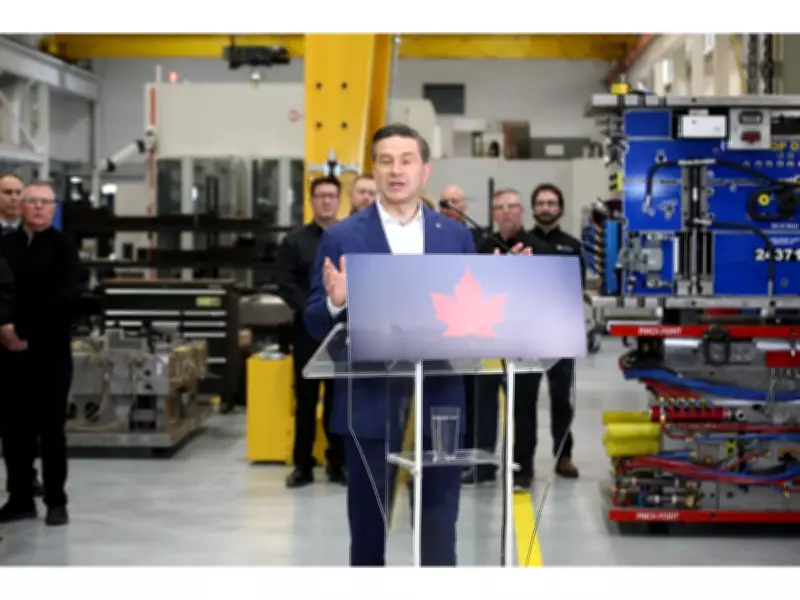
Conservative Leader Pierre Poilievre presented a detailed plan on Sunday designed to shield Canada's automotive sector and ensure tariff-free access to the United States market. The announcement took place during a press conference at Cavalier Tool and Manufacturing Ltd. in Windsor, where Poilievre outlined measures to revitalize an industry facing significant challenges.
Key Components of the Auto Sector Protection Plan
The proposal includes several critical elements aimed at supporting domestic manufacturing and reducing trade barriers:
- Federal Sales Tax Exemption: Canadian-made vehicles would be exempt from federal sales tax under the plan.
- Dollar-for-Dollar Tariff Rule: A new auto pact would implement a "dollar-for-dollar" system, allowing automakers assembling cars in Canada to import vehicles from the U.S. or Mexico without duties, up to the equivalent value of their Canadian production.
- Production Targets: The plan sets an ambitious goal to increase Canadian auto production to two million vehicles annually over the next decade.
- Policy Changes: It calls for ending subsidies on electric and plug-in hybrid vehicles, establishing harmonized North American cybersecurity and data standards, and banning vehicles using software linked to China or Russia.
Addressing Industry Decline and Tariff Challenges
Poilievre emphasized the urgency of his plan, citing data from the Trillium Network for Advanced Manufacturing showing that Canadian auto production has declined by almost 50% since 2016, dropping to 1.2 million vehicles last year. Most of these vehicles are exported to the U.S., but manufacturers face substantial tariff costs following former President Donald Trump's imposition of new import duties on foreign vehicles nearly a year ago.

In response, Canada implemented matching counter-tariffs on U.S.-made cars and trucks. Despite this, the Conservatives noted that over 40% of cars sold in Canada last year were manufactured in the U.S., even as domestic production continued to fall.
Political Context and Criticisms
During his announcement, Poilievre criticized Liberal policies, specifically targeting Mark Carney's approach. "Mark Carney is presenting a fantasy and dangerous illusion that we can replace auto sales to the U.S. with EVs overseas," Poilievre stated. "The Liberal plan will mean no more auto industry in Canada. Conservatives will bring back good-paying auto jobs, grow production, and make Canada a place where we can build the future of our auto sector through tariff-free trade with the U.S."
He added, "Without tariff relief, it will only get worse," echoing concerns from the Conservative Party about the sector's future.
Collaborative Efforts and Future Steps
Prior to the Windsor announcement, Poilievre traveled to Detroit with local Conservative MPs Kathy Borrelli, Harb Gill, and Chris Lewis to meet with executives from Ford and General Motors. He expressed willingness to collaborate across party lines, stating he would share his proposal with the prime minister and encouraging him to adopt the ideas. "I want to save the jobs of the amazing Canadian auto workers in Windsor, Oshawa, Brampton, and elsewhere across our great country," Poilievre said. "I'm prepared to work with anybody from any party to save these jobs."
None of the Windsor-area MPs spoke at Sunday's news conference, highlighting the focus on Poilievre's leadership in presenting this initiative. The plan aims to not only protect existing jobs but also foster growth and innovation in Canada's auto manufacturing landscape.