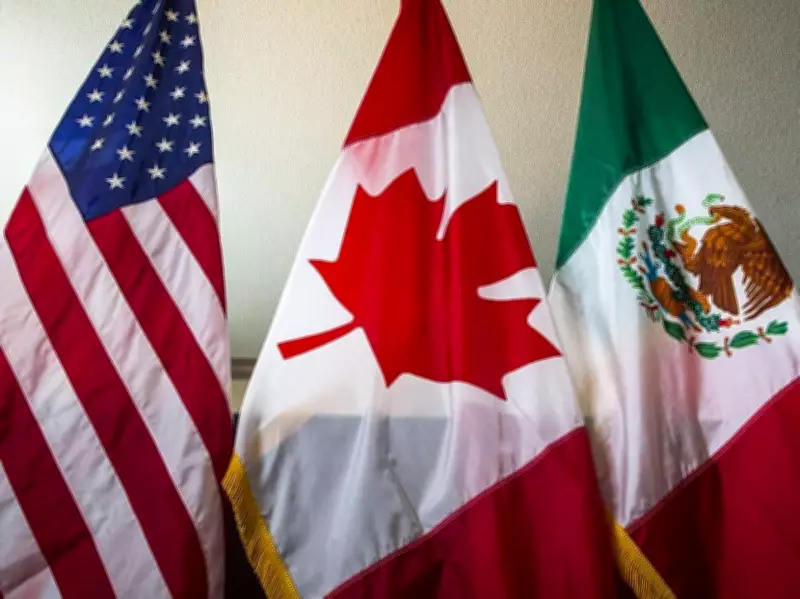
Mexico's Trade Consultations Advocate CUSMA Refinement Over Major Overhaul
Consultations conducted by the Mexican government with key economic sectors have concluded that the Canada-United States-Mexico Agreement (CUSMA) should undergo targeted improvements rather than a comprehensive renegotiation. The findings, which emerged from extensive sectoral discussions, emphasize preserving the trade pact while enhancing its effectiveness.
Preserving a Vital Economic Asset
According to a report from Mexico's economy ministry, the majority of business interests surveyed view the three-nation accord as a critical asset that has successfully promoted economic integration across North America. The consultations involved 30 sector roundtables spanning industries such as metals, agriculture, construction, automotive manufacturing, and tourism, with over 500 surveys distributed to companies, chambers, and industrial groups.
"The treaty is perceived as an asset that should be preserved, even though its operation could be improved," the report stated, highlighting the consensus among stakeholders. The consultations determined that CUSMA has not only facilitated cross-border commerce but also enhanced the region's global competitiveness over the past three decades.

Strategic Improvements Over Renegotiation
Deputy Minister for Industry and Commerce Vidal Llerenas emphasized during a presentation of the consultation results that the focus should be on better implementation, modernization, and increased inclusivity of the agreement. "The challenge is to implement it better, modernize it, and make it more inclusive," Llerenas remarked, underscoring the preference for refinement rather than drastic changes.
The upcoming review of the high-stakes trade pact, scheduled to begin on March 16, carries significant implications for trillions of dollars in cross-border North American commerce. President Claudia Sheinbaum is banking on a successful review to stimulate Mexico's sluggish economy, which has been impacted by U.S. trade uncertainty and concerns over her administration's sweeping reforms, including a judicial overhaul that critics argue threatens judicial independence.
Political Context and Economic Stakes
CUSMA, which replaced the earlier NAFTA agreement, was signed during President Donald Trump's first term. The impending review comes amid mixed signals from Trump, who has at times suggested a preference for new bilateral deals instead of maintaining the trilateral framework. This political backdrop adds complexity to the review process, making the Mexican consultations' recommendations particularly timely.
The consultations' conclusion that CUSMA should be strengthened through targeted tweaks rather than a major revamp reflects a pragmatic approach to sustaining and enhancing North American trade relations. As the review approaches, stakeholders across the region will be closely monitoring developments that could shape the future of economic integration and competitiveness in North America.