

U.S. Commerce Chief Warns Canada's China Trade Moves Could Undermine North American Trade Deal
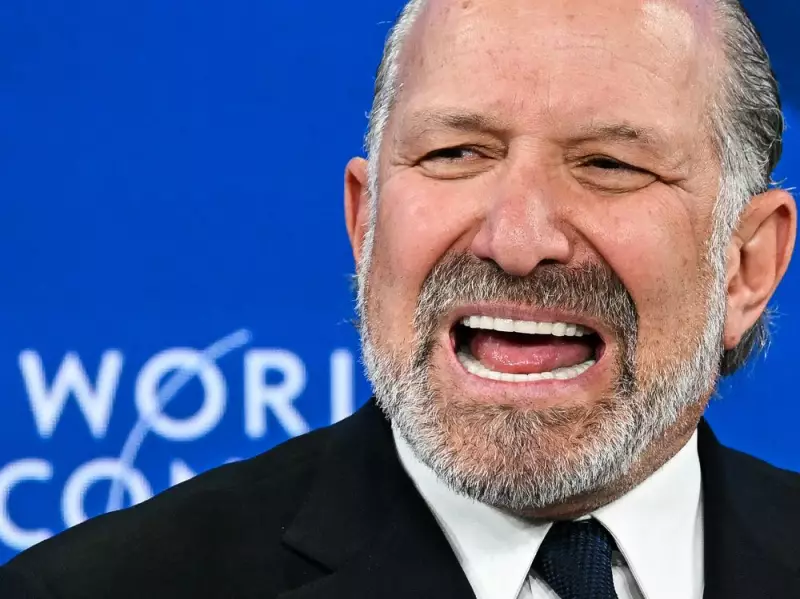
In a striking rebuke from Davos, U.S. Commerce Secretary Howard Lutnick has characterized Canadian Prime Minister Mark Carney's recent efforts to bolster trade relations with China as mere "political noise" that could potentially endanger Canada's privileged access to the American market. Speaking during an interview with Bloomberg Television at the World Economic Forum, Lutnick expressed skepticism about the practical benefits of Carney's diplomatic maneuvers with Beijing.
Questioning the Economic Logic
Lutnick challenged the fundamental premise behind Canada's outreach to China, asking pointedly: "Do you think China is going to open their economy to accept exports from Canada? This is the silliest thing I've ever seen." The Commerce Secretary emphasized the overwhelming economic reality facing Canadian policymakers, noting that Canada currently enjoys "the second-best deal in the world" through its access to the United States' $30 trillion economy, trailing only Mexico in terms of preferential market access.
The U.S. official dismissed Carney's characterization of China as a "more predictable" trading partner than the United States, suggesting such statements reflect political posturing rather than economic calculation. "I don't think it can be real, because he took out the math of Canada's economy and doing business with the United States," Lutnick remarked, questioning the wisdom of potentially jeopardizing existing advantageous arrangements.

Implications for CUSMA Renegotiation
Lutnick explicitly linked Canada's diplomatic overtures toward China with the upcoming renegotiation of the Canada-United States-Mexico Agreement (CUSMA), suggesting that Ottawa's actions could influence American negotiating positions. "If Ottawa opts to import Chinese electric vehicles and other trade-strengthening steps with Beijing, do you think the president of the United States is going to say you should keep having the second-best deal in the world during CUSMA talks?" he questioned rhetorically.
The Commerce Secretary indicated that formal discussions about revising the North American trade pact would likely occur "towards the end of the summer and the middle of the summer" this year, creating a relatively narrow window for diplomatic positioning before substantive negotiations begin.
Canadian and Mexican Responses
Canadian Finance Minister Francois-Philippe Champagne offered a contrasting perspective during remarks in Quebec City, noting that every G7 nation is pursuing its own strategic approach to China. "We'll continue to work hand in hand with our U.S. partner," Champagne assured, while simultaneously emphasizing that "diversification is key" for building economic resilience.
Meanwhile, Mexican President Claudia Sheinbaum addressed the growing tensions between Canadian and American leadership, stating that her nation remains committed to preserving the CUSMA framework despite recent disputes between Carney and U.S. President Donald Trump. Sheinbaum revealed plans to communicate with Carney and announced that Mexico's Economy Minister Marcelo Ebrard would travel to Washington for trade discussions next week.
The Broader Context
Carney's diplomatic initiative with China, finalized last week through an agreement with President Xi Jinping, represents a significant strategic shift. The arrangement opens doors for Chinese electric vehicle imports and automotive investment into Canada while promising reduced Chinese tariffs on Canadian canola exports. This bilateral agreement reflects Ottawa's broader effort to diversify trading relationships beyond its traditional reliance on the United States.
Lutnick's comments from Davos highlight the delicate balancing act facing Canadian trade policymakers as they navigate between maintaining privileged access to the American market while simultaneously pursuing economic diversification through partnerships with other major economies. The Commerce Secretary's characterization of Carney's China policy as "political noise" underscores the potential diplomatic friction that may emerge as CUSMA renegotiations approach.






