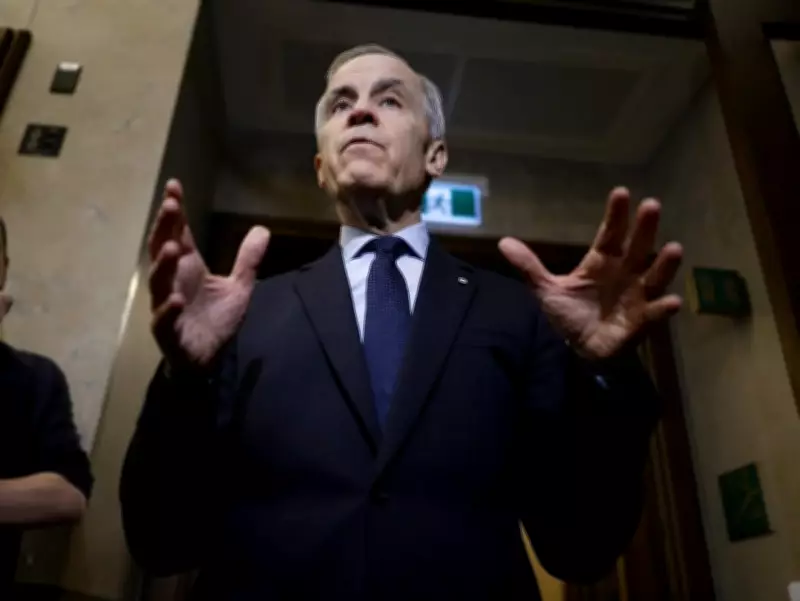
Prime Minister Mark Carney's plan to double Canada's non-U.S. exports to $600 billion annually within a decade faces scrutiny from a new Fraser Institute study, which suggests the target is likely unachievable.
The fiscally conservative think tank's report, titled "Assessing Canada's Trade Dependence on the U.S.," highlights that previous federal governments have pursued similar diversification efforts for five decades with only limited success. Co-author Jock Finlayson noted that the Carney government is not the first to prioritize reducing reliance on the United States, and it is important to understand the historical challenges.
Historical trade trends
According to the study, from 1999 to 2024, the share of Canadian goods exported to the U.S. decreased only modestly from 86.7% to 76.3% — a drop of just 12% over 25 years. Services exports to the U.S. also declined gradually, falling from 60.4% in 1999 to 51.6% in 2024, a decrease of 14.5%. These figures underscore the difficulty of shifting trade patterns away from Canada's largest trading partner.

Factors beyond government control
The report emphasizes that many factors influencing trade are not controlled by the government, as decisions are driven by the private sector. Key elements include Canada's geographic proximity to the U.S., similar legal standards and business practices, transportation costs, and well-developed cross-border networks. Co-author Steven Globerman stated that counteracting these powerful forces has proven difficult in the past, suggesting significant challenges ahead.
Despite these obstacles, the study acknowledges that Carney's diversification effort is a sensible policy, which is why Canadian governments have been attempting it for 50 years. Trade between Canada and the U.S. has gradually declined in recent years, a trend accelerated by U.S. President Donald Trump's tariff and trade war. Scotiabank reported that the share of Canadian exports to the U.S. averaged 76% in 2024 and 72% in 2025, falling to 66% in February 2026, driven by decreased exports to the U.S. and increased exports to other regions, mainly Europe.
Carney has cited over 20 new economic and security agreements signed with foreign countries during his first year as PM. However, these are in early stages, and future trade will be influenced by factors beyond government control, including oil prices and foreign conflicts. Additionally, the aggressive pivot toward China raises concerns about potentially harming the long-term relationship with the U.S., Canada's largest trading partner.