

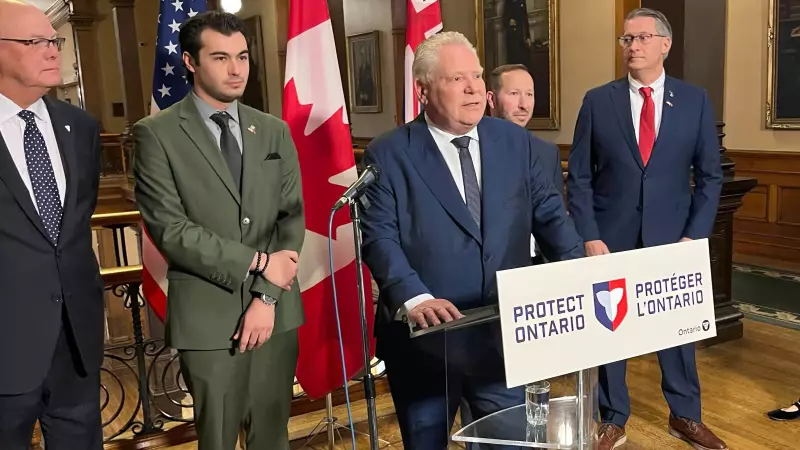
Ontario Premier Doug Ford has voiced significant apprehension regarding potential federal moves to relax tariffs on Chinese electric vehicles as part of a renewed trade dialogue with Beijing.
Carney's First Official Trip to China Aims to Reset Trade Talks
Prime Minister Mark Carney is scheduled to embark on his inaugural official visit to China, with the primary objective of resetting trade negotiations with Chinese President Xi Jinping. The high-stakes diplomatic mission, set for the coming weeks, is expected to address a range of bilateral trade issues that have been strained in recent years.
Among the potential items on the negotiation table is the easing of existing tariffs on electric vehicles imported from China into the Canadian market. This prospect has raised immediate red flags for the Premier of Ontario, home to Canada's vital automotive manufacturing sector.

Ford Fears for Ontario's Auto Industry
Premier Doug Ford stated he is "very concerned" about the implications such a deal could have for workers and manufacturers in Ontario. The province's auto industry is a cornerstone of its economy and is currently undergoing a massive, multi-billion dollar transition towards electric vehicle production.
"We cannot have a situation where we are investing billions to build a homegrown EV supply chain, only to undercut it with vehicles that may not meet the same labour or environmental standards," a statement from the Premier's office indicated. The concern centres on the fear that cheaper Chinese EVs, potentially subsidized by the state, could flood the market and stifle the growth of domestic manufacturing.
A Delicate Balancing Act for the Federal Government
The federal government faces a complex balancing act. On one hand, improving trade relations with China, a major global economic power, is a strategic priority. Easing tariffs could also align with broader climate goals by making EVs more affordable for Canadian consumers.
However, this must be weighed against the need to protect a key domestic industry and the thousands of jobs it supports. The potential deal also arrives amid ongoing geopolitical tensions and concerns over supply chain security. International security experts have advised caution, noting China's "history of economic coercion" in trade dealings.
The outcome of Prime Minister Carney's discussions in China will be closely watched by industry leaders, provincial governments, and international trade analysts. The decision will signal Canada's approach to navigating the competing demands of international trade, domestic industrial policy, and the green transition.






