

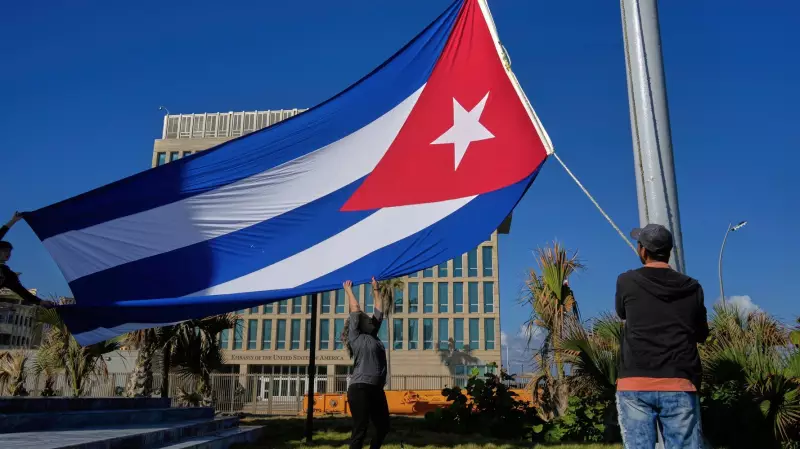
Flags flew at half-mast in Havana before dawn on Monday as Cuba entered a period of official mourning for 32 security officers. The Cuban government states these individuals were killed during a surprise U.S. military strike in Venezuela over the weekend, targeting the island nation's closest political and economic ally.
A Strategic Alliance Shattered
The bond between Cuba and Venezuela has been profound and multifaceted. For years, Cuban soldiers and security agents served as bodyguards for Venezuelan President Nicolás Maduro. In return, Venezuela supplied Cuba with vital petroleum, providing a lifeline for its struggling, state-controlled economy. This weekend's events, culminating in Maduro's reported capture, have thrown that critical relationship into jeopardy, leaving Cubans fearful for their future.
Cuban authorities confirmed the deaths but provided no further details. The Trump administration has openly stated that removing Maduro from power advances a long-standing U.S. objective: striking a blow to the Cuban government. Severing the Havana-Caracas axis could have disastrous consequences for Cuban leadership, who on Saturday denounced the action as "state terrorism" and called for international condemnation.

The Looming Economic Catastrophe
The potential loss of Venezuelan oil poses an immediate and severe threat to Cuba's stability. According to Jorge Piñón, a Cuban energy expert at the University of Texas at Austin Energy Institute, Venezuela was shipping an average of 35,000 barrels of oil per day to Cuba over the last three months. This covered roughly a quarter of the island's total demand.
"The question to which we don't have an answer, which is critical: Is the U.S. going to allow Venezuela to continue supplying Cuba with oil?" Piñón said. He pointed to Mexico's reduced shipments to Cuba after U.S. diplomatic pressure as a precedent, suggesting other potential suppliers would be reluctant to "go bonkers" by defying Washington.
Cuban economist Ricardo Torres from American University framed the situation starkly. "Blackouts have been significant, and that is with Venezuela still sending some oil," he said. "Imagine a future now in the short term losing that. It's a catastrophe." Cuba lacks the hard currency to buy oil on the international market, making the Venezuelan subsidy irreplaceable under current conditions.
Public Anguish and a Search for Alternatives
The grim reality is settling in for Cuban citizens, long accustomed to blackouts and shortages. "I can't talk. I have no words," said 75-year-old Berta Luz Sierra Molina, overcome with emotion. Others expressed defiance. Sixty-three-year-old Regina Mendez declared, "Give me a rifle, and I'll go fight," highlighting the depth of feeling on the island.
Experts are searching for potential alternatives, but the options are limited. Piñón noted that Russia sends Cuba about 2 million barrels of oil a year and has the capability to increase supply. However, he questioned Moscow's political will, asking, "Do they have the political commitment, or the political desire to do so? I don't know." Torres was more skeptical, suggesting that helping Cuba could complicate Russia's more important strategic negotiations with the U.S. regarding Ukraine.
Torres proposed that the only path to securing new support, potentially from China, would require significant internal economic reforms. "Cuba should open its doors to the private sector and market and reduce its public sector," he argued. Yet, he conceded the regime may see no viable alternative, leaving the nation facing its most severe economic crisis in decades.






