

China Trade Agreement to Cast Shadow Over Canada-U.S. Negotiations
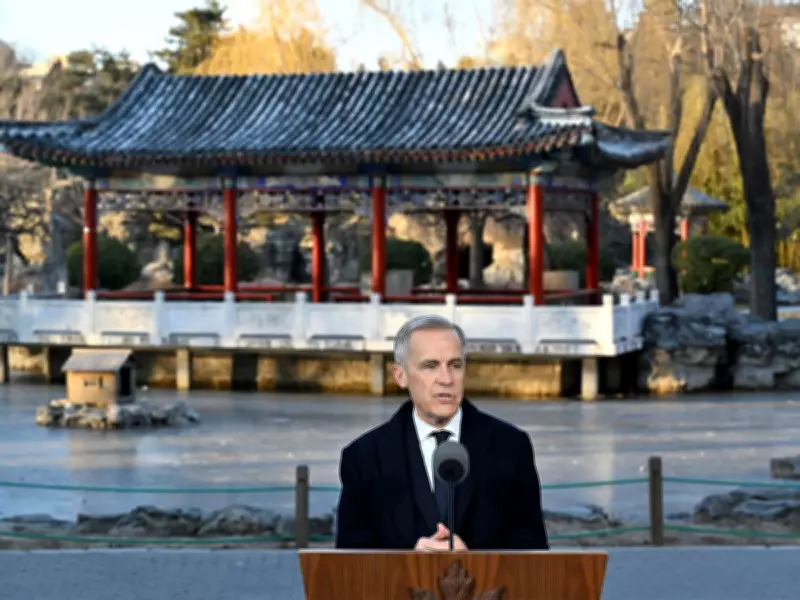
A former United States Department of State official has cautioned that Canada may face a challenging position during upcoming trade discussions with the United States, largely due to Prime Minister Mark Carney's recent diplomatic mission to China. Edward Fishman, a respected researcher at Columbia University's Centre on Global Energy Policy, emphasized that the China issue will dominate the negotiation landscape, particularly following Carney's January visit to Beijing.
Bipartisan U.S. Concerns About China
Fishman, who served at the U.S. Department of State from 2015 to 2017 and is recognized as an authority on economic sanctions and trade policy, explained during a panel discussion in Calgary that there exists a strong bipartisan consensus in the United States viewing China as a significant national security threat. "The China issue is going to loom large, particularly in the wake of Carney's visit to Beijing," Fishman stated unequivocally.
CUSMA Renewal Confidence Amid Tensions
Despite the anticipated difficulties, Fishman expressed continued confidence that the Canada-U.S.-Mexico Agreement will be successfully renewed following its scheduled review this summer. However, he acknowledged that the lead-up to these crucial talks is already marked by considerable tension and complex diplomatic maneuvering.

Recent reports from Bloomberg News indicate that U.S. President Donald Trump has questioned his advisors about potentially withdrawing from the trade agreement altogether. Fishman warned that such a move would prove disastrous for both nations, creating economic instability and disrupting long-established trade relationships.
Details of the Canada-China Agreement
The specific agreement reached between Carney and Chinese President Xi Jinping in January includes provisions to reduce tariffs between the two countries and allows for Beijing to export up to 49,000 electric vehicles to Canada. Importantly, this arrangement does not constitute a comprehensive free trade agreement, but rather represents initial steps toward enhanced economic cooperation.
In response to these developments, President Trump has threatened to impose 100 percent tariffs on Canadian goods if Ottawa proceeds with a formal trade deal with China. Carney has since clarified through CBC News that Canada has no immediate plans to pursue a full free trade agreement with Beijing, though the preliminary agreement has undoubtedly placed the issue firmly on the U.S. negotiation agenda.
Canada's Negotiating Position and Opportunities
Robert Johnston, Director of Energy and Natural Resources Policy at the University of Calgary, provided additional analysis suggesting that Canada will enter CUSMA negotiations from a position of relative weakness compared to its southern neighbor. Johnston identified several factors likely to influence discussions, including existing U.S. tariffs on Canadian steel and aluminum—which technically fall outside CUSMA's scope—alongside broader concerns about China and national security.
Despite these challenges, Johnston noted potential areas for mutual benefit that could emerge during negotiations. These include cooperation on critical minerals development, enhanced arctic security measures, and the alignment of U.S.-Canada policies toward China. Such collaborative opportunities might help balance the negotiation dynamics and foster productive outcomes for both countries.
Fishman, author of "Chokepoints: American Power in the Age of Economic Warfare," concluded that while the road to renewed trade agreements will be complex, the fundamental economic interdependence between Canada and the United States provides strong incentives for both nations to navigate these diplomatic waters carefully and reach mutually beneficial agreements.






