

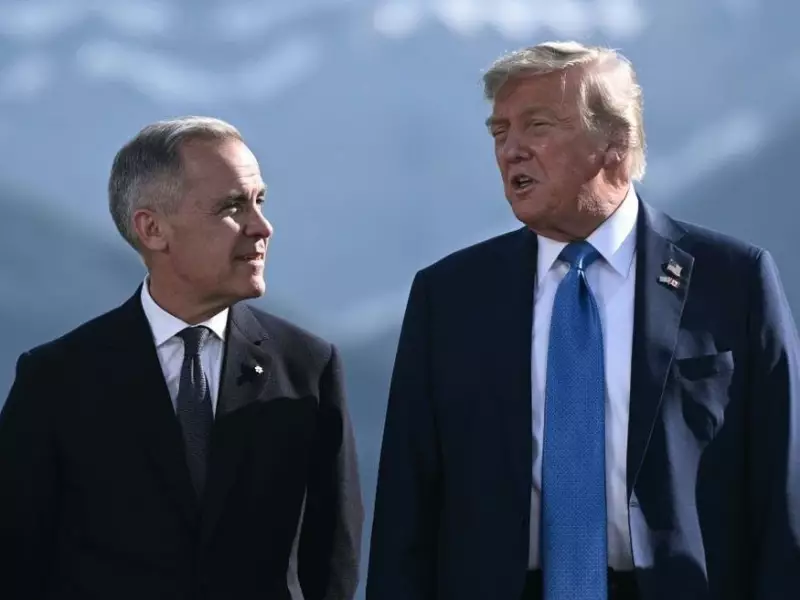
As 2025 draws to a close, the political story dominating Canada is not just the imposition of U.S. tariffs by President Donald Trump, but the perceived failure of Prime Minister Mark Carney to secure a deal to counter them. Carney, who sold himself to Liberal party members and the nation as the seasoned negotiator who could manage the Trump challenge, has ended the year without a tangible agreement, leaving key economic questions unanswered.
The Promise of a Proven Negotiator
Following Justin Trudeau's resignation early last year, Mark Carney launched his bid for the Liberal leadership with a central pledge: his unique ability to handle the United States under Donald Trump. "I know the president, I've dealt with the president in the past... and I know how to negotiate," Carney assured voters. He won the leadership and became Prime Minister in March, inheriting the immediate crisis of looming U.S. tariffs set for April 2.
Instead of confronting the trade threat directly, Carney's first major move was to call a federal election. He dissolved Parliament, with the Governor General setting an election for April 28. This decision ensured the country would be in the midst of a campaign when the tariffs took effect. While the Liberals were re-elected on April 28, they fell short of a majority, securing a third consecutive minority government.

A Year of Missed Deadlines and Setbacks
Canadian officials were told in March that negotiations would start promptly after the April 2 tariff implementation, with Canada as a priority. Optimism suggested a deal could be reached by the G7 summit in Kananaskis in June. That did not happen. Instead, Carney and Trump agreed to work toward a deal by July 21.
The path nearly derailed in late June over Canada's digital services tax, which targeted U.S. companies. In a dramatic move aimed at saving the negotiations, Carney scrapped the entire tax on June 29, insisting it would support a resumption of talks. Despite this concession, the July 21 deadline passed without an agreement.
Months of quiet negotiations followed until a new crisis erupted in mid-fall. Ontario Premier Doug Ford aired an anti-tariff advertisement featuring clips of Ronald Reagan. President Trump was reportedly furious, publicly announcing he "HEREBY TERMINATED" talks with Canada. Carney initially claimed he had not seen the ad, but Ford later revealed he had shown it to the Prime Minister before it aired.
Stagnation and a Looming Deadline
While relations between the two leaders appear to have thawed since the ad controversy in late October, no trade deal has materialized. When recently asked about his last conversation with Trump, Carney dismissively replied, "Who cares?" More concretely, just days ago he told Canadians that a sectoral trade deal is now "unlikely" as the 2026 renewal deadline for the Canada-United States-Mexico Agreement (CUSMA) approaches.
The core of the political narrative is the gap between promise and reality. Carney presented himself as the antidote to Trumpian trade pressures, yet under his watch, no progress has been made. The tariffs remain, and the broader trade relationship faces the significant test of CUSMA renewal.
As Canada looks to 2026, the pressure is mounting on Prime Minister Carney to finally deliver on his negotiator reputation. The health of the Canadian economy may depend on it, as continued stagnation and the risk of entering CUSMA talks from a position of weakness pose serious challenges. For now, the story of the year remains one of unfulfilled potential and a critical file left unresolved.






