

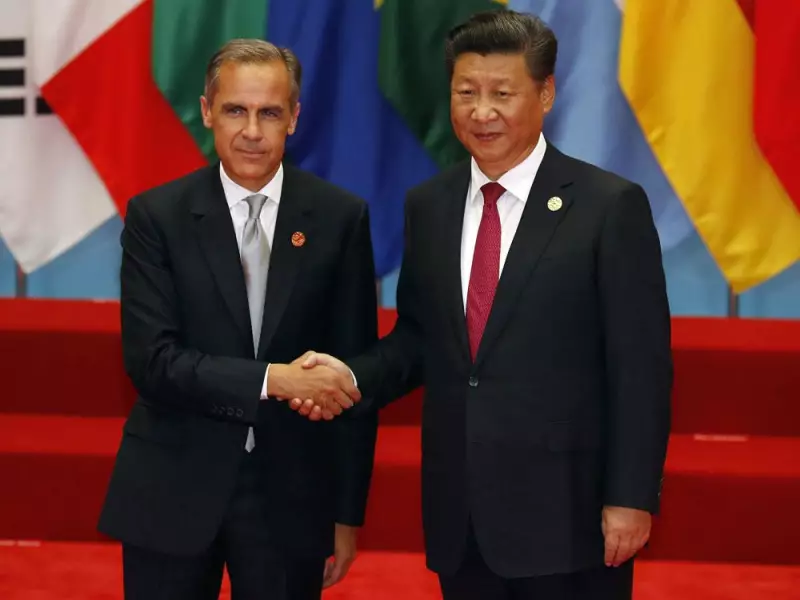
Prime Minister Mark Carney is confronting a significant economic and political dilemma as he prepares for critical trade discussions with Chinese President Xi Jinping this week. The core issue is a stark choice between safeguarding Ontario's burgeoning electric vehicle industry and protecting Western Canada's vital canola oil sector, a conflict born from a tit-for-tat tariff war.
The Tariff Standoff: EVs Versus Canola
The current impasse stems from actions taken by the previous Liberal government under Justin Trudeau. In alignment with similar measures by former U.S. President Joe Biden, Canada imposed a 100% tariff on electric vehicles manufactured in China. The rationale was to shield Canada's domestic auto industry from what was perceived as dumping of cheaper, subsidized, and technologically advanced Chinese EVs into the nascent Canadian market.
China's retaliatory move was swift and targeted. Beijing slapped a 75.8% tariff on Canadian canola oil, a direct blow to the agricultural heartland of Saskatchewan, Alberta, and Manitoba. This retaliation has placed the two key sectors on a collision course, with Carney now tasked with navigating a path forward.

Regional Pressures and Economic Stakes
The political pressure on Carney is mounting from opposing sides of the country. Saskatchewan Premier Scott Moe is vehemently advocating for the protection of the canola sector, which is a cornerstone of the Prairie economy. Conversely, Ontario Premier Doug Ford is pushing just as hard to defend the auto sector, which is central to his province's industrial base and the recipient of massive government investment.
Federal, Ontario, and Quebec governments have collectively earmarked a staggering $52.5 billion to develop a domestic EV and EV supply chain sector. This enormous public investment underscores the high stakes for Ontario's economic future. However, the strategy of picking winners through subsidies has led directly to this difficult crossroads.
No Easy Solutions in Sight
While a major breakthrough is not anticipated during Carney's meetings in Beijing, the Prime Minister must eventually chart a course. The options appear limited and fraught with political risk. One path would be to lift the tariffs on Chinese EVs, allowing more affordable vehicles to enter the Canadian market, which could boost consumer adoption but potentially devastate the domestic auto industry—a move Ford strongly opposes.
The alternative is to maintain the status quo, which continues to inflict severe damage on Western Canadian canola farmers unless a new bilateral deal can be struck. The situation is further complicated by softer-than-expected EV sales in Canada, attributed to higher prices, range anxiety, and an underdeveloped national charging infrastructure compared to traditional gasoline-powered cars.
Carney did not create this policy dilemma, but it now falls to his government to resolve it. The standoff serves as a potent illustration of the complex challenges that arise when governments intervene heavily in specific sectors of the economy, creating winners and losers that can clash on the international stage.






