

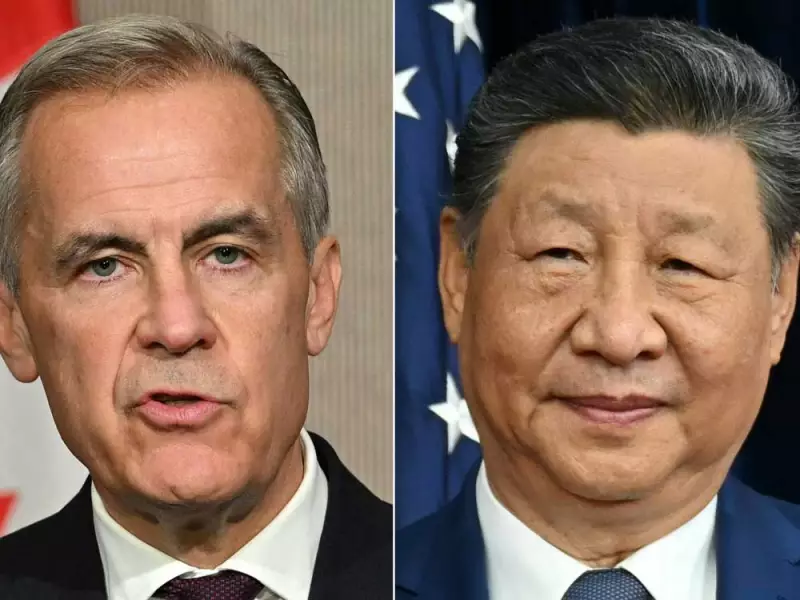
Prime Minister Mark Carney is navigating a complex diplomatic tightrope, advocating for increased trade with China while simultaneously identifying the nation as a premier security threat to Canadian democracy. This dual stance, outlined in a recent year-end interview, places a fundamental question of national security at the forefront of Canada's economic policy.
The Core Contradiction: Trade Ambition vs. Security Threat
Carney has publicly stated that Canada must expand its trade relationship with China to reduce economic dependence on the United States. However, this ambition directly conflicts with the findings of the Hogue inquiry, which characterized China as "the most persistent and sophisticated foreign interference threat to Canada." The Prime Minister proposes to manage this conflict by establishing strict "guardrails" that would exclude cooperation in sensitive sectors like artificial intelligence, critical minerals, and defence.
Delayed Safeguards Raise Alarms
This proposed framework, however, is overshadowed by the Liberal government's failure to implement critical protective measures recommended years ago. Most notably, the government has yet to establish a foreign lobbyists' registry, a key recommendation from Canada's foreign interference inquiry. Officials have claimed to be "actively considering" the registry for nearly five years.

This delay persists despite a commitment from Public Safety Minister Gary Anandasangaree in August 2025 that a foreign interference commissioner would be appointed in September, with the registry becoming operational in the fall. Critics argue this inaction is inexcusable given documented, ongoing attempts by China to influence Canadian politicians and officials through means that extend beyond normal diplomacy, including the intimidation of human rights activists on Canadian soil.
Questioning Commitment and Weighing the Consequences
The continued postponement of the registry and other defensive measures raises significant questions about the government's seriousness in countering foreign interference. Observers warn that a return to prioritizing trade over security would be disastrous for Canada's democratic institutions.
Skepticism is further fueled by the government's recent fiscal track record. Carney's promised "guardrails" on national security are viewed with caution, following the Liberal government's decision in its November 2025 budget to replace previous spending guardrails with less stringent fiscal rules.
Despite the clear risks, there is acknowledgment of the economic imperative. Carney has pledged to double Canada's non-U.S. exports within a decade, a goal that likely necessitates deeper engagement with major economies like China. The central challenge for his administration will be proving it can robustly safeguard Canadian sovereignty and democratic processes while pursuing this essential economic diversification.






