

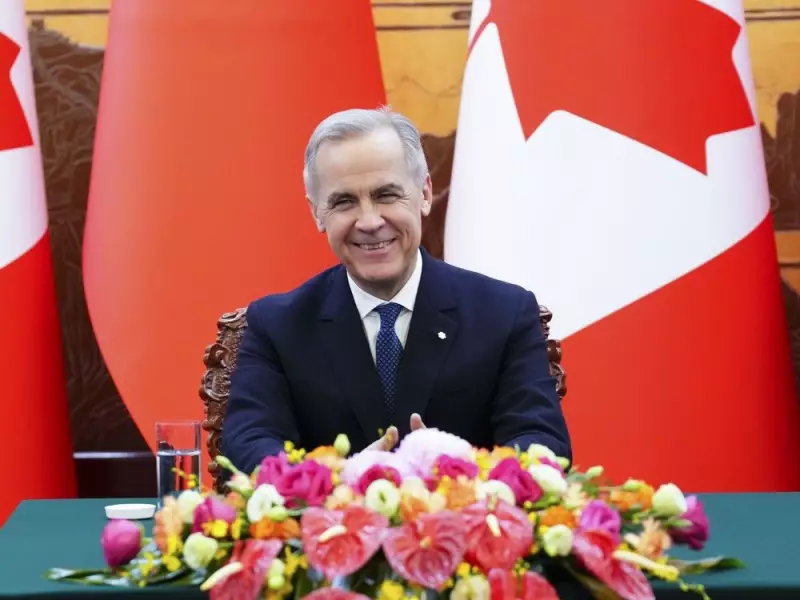
All eyes are on Beijing this Friday as Canadian Prime Minister Mark Carney sits down with Chinese President Xi Jinping for a high-stakes meeting. The outcome is poised to have immediate and profound consequences for key Canadian industries, particularly canola farmers and electric vehicle manufacturers, who are holding their breath over potential tariff relief.
A High-Stakes Diplomatic Encounter
The meeting, scheduled for 11 a.m. Beijing time in the Great Hall of the People, marks the first such leader-level summit since 2017. It represents the culmination of a dramatic shift in Canada's foreign policy approach toward China over the past year. This diplomatic thaw follows a prolonged period of chilled relations, largely stemming from Canada's 2018 arrest of Huawei executive Wang Menzhou and China's subsequent detention of Canadians Michael Spavor and Michael Kovrig.
Just one year ago, Ottawa's official stance labeled China an "increasingly disruptive" global force and a significant threat to national security. However, on Thursday, Carney heralded a "new era" in Sino-Canadian relations, describing China as a strategic partner and expressing that Canada is "heartened" by Xi's leadership.

Canola and Pork: Seeking Relief from Punitive Tariffs
For Canada's agricultural sector, the meeting's success hinges on securing the removal of economically damaging Chinese tariffs. The canola industry has been particularly hard-hit, facing tariffs ranging from 76 to 100 per cent that have effectively shut farmers out of what was their second-largest export market. Similarly, Canadian pork and seafood producers are grappling with a 25 per cent tariff burden.
The imposition of these tariffs was a direct retaliatory move by Beijing. They were enacted in response to Canada's decision to implement 100 per cent tariffs on Chinese electric vehicles, a policy aligned with U.S. efforts to protect North American EV manufacturing. The timing of China's canola tariff announcement in August was strategically aimed at inflicting maximum damage, coming just weeks before the Canadian harvest season.
The Electric Vehicle Conundrum
While farmers seek market access, Canada's automotive sector faces a different anxiety. There is palpable concern that Carney might agree to lower the 100 per cent EV tariffs that currently shield the Canadian market from a potential flood of cheap, heavily state-subsidized Chinese electric vehicles. This delicate balancing act pits the interests of one vital industry against another within the broader framework of a complex trade relationship.
Canadian officials have indicated that the discussions in Beijing will extend beyond tariffs and specific industries. The agenda is expected to cover broader topics including energy cooperation, manufacturing, and initiatives to strengthen people-to-people connections between the two nations.
Navigating a Complex Partnership
Any potential deal with China is fraught with diplomatic complexity. The country has a well-documented history of employing trade and diplomatic measures as tools of coercion. The recent years of tension, exemplified by the arbitrary detentions of the "Two Michaels," serve as a stark reminder of the challenges in this bilateral relationship.
For Prime Minister Carney, the benchmark for a successful trip will be whether he can secure tangible concessions from the Asian economic powerhouse, most notably the removal of the punishing canola tariffs. The results of this pivotal meeting will not only determine the immediate economic fate for thousands of Canadian farmers and workers but also set the tone for the next chapter in Canada-China relations.






