

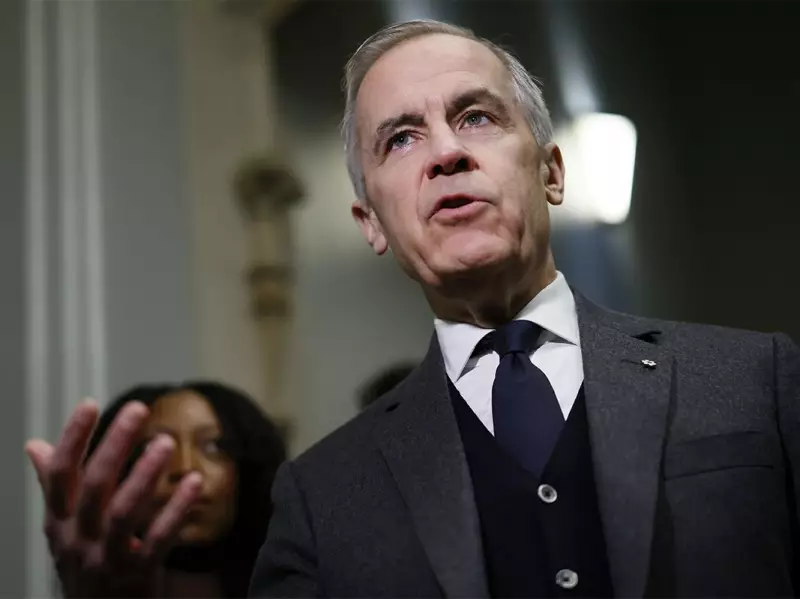
Canadian Prime Minister Reaffirms Davos Stance in Conversation with U.S. President
Prime Minister Mark Carney has confirmed that he stood by his controversial Davos remarks during a telephone conversation with United States President Donald Trump this week. The Canadian leader pushed back against claims from U.S. Treasury Secretary Scott Bessent that he was backtracking on his World Economic Forum statements.
Clarifying the Conversation
Carney described the Monday call as a "very good conversation" that covered multiple international issues including Ukraine, Venezuela, and Arctic security matters. However, the Prime Minister made clear that his central message to President Trump remained consistent with what he had delivered in Switzerland just days earlier.
"To be absolutely clear, and I said this to the president, I meant what I said in Davos," Carney told reporters during a briefing in Ottawa. The Prime Minister emphasized that his administration's approach to international relations and trade policy reflects this fundamental position.

The Davos Declaration
In his speech at the World Economic Forum, Carney had made headlines by declaring the international rules-based order a "fiction" that has effectively ceased to function. He urged mid-sized nations like Canada to develop new systems of international cooperation while resisting economic coercion from more powerful nations.
When questioned by journalists about whether he had softened his position during the presidential call, Carney responded with a definitive "no." This directly contradicts Bessent's account to Fox News, where the Treasury Secretary claimed Carney was "aggressively walking back" his Davos comments.
Canada's Trade Diversification Strategy
During their conversation, Carney explained Canada's comprehensive approach to trade diversification to President Trump. The Prime Minister outlined what he described as "12 new deals, four continents, in six months," including Ottawa's recent tariff-relief agreement with China.
"This is the context of our discussion: what Canada is doing positively to build new partnerships around the world," Carney stated. He emphasized that Canada was the first nation to recognize the shift in American trade policy initiated by the Trump administration and has responded proactively.
The Prime Minister specifically highlighted the opportunity to advance the Canada-United States-Mexico Agreement (CUSMA), which President Trump had originally agreed to during his first term. Carney noted that Canada's minister responsible for U.S. trade, Dominic LeBlanc, had recently discussed both the China agreement and CUSMA negotiations with U.S. Trade Representative Jamieson Greer.
Addressing Tariff Concerns
The conversation occurred against the backdrop of President Trump's recent threat to impose 100 percent tariffs on Canadian goods if Canada "makes a deal with China." Carney has consistently clarified that Canada is not pursuing a comprehensive free-trade agreement with Beijing, but rather focusing on specific tariff barrier reductions through the recent arrangement.
"Canada was the first country to understand the change in U.S. trade policy that he initiated, and we're responding to that," Carney explained. "We're responding positively by building partnerships abroad, building at home and prepared to respond positively by building that new relationship with CUSMA. He understood that."
Broader Implications
The North American trade agreement faces a scheduled review in July, adding urgency to ongoing discussions between the two nations. Carney's firm stance during the presidential call demonstrates Canada's commitment to its independent trade strategy while maintaining diplomatic relations with its largest trading partner.
The Prime Minister's remarks underscore a significant shift in how middle powers like Canada are navigating an increasingly complex global landscape where traditional international frameworks face growing challenges.






