

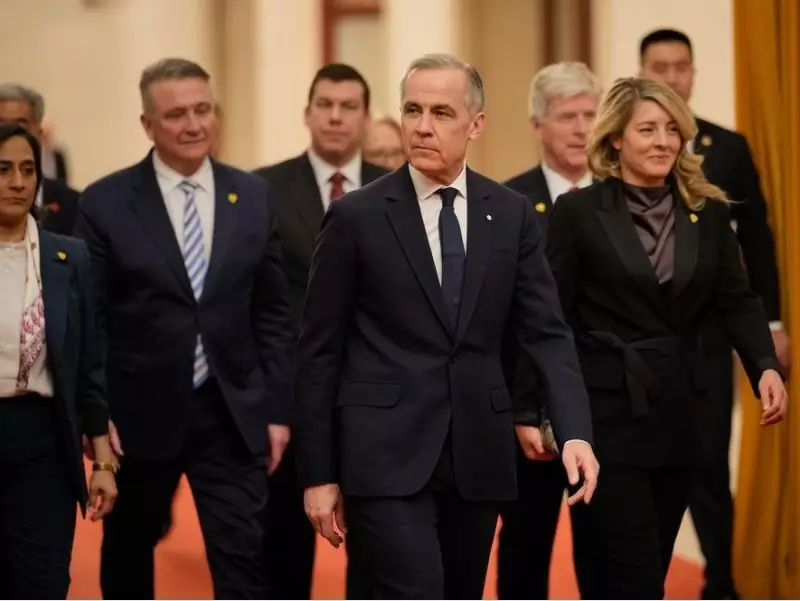
Prime Minister Mark Carney has declared China a more reliable and predictable trading partner than the United States, a bold statement made during a high-stakes visit to Beijing that concluded with a lopsided trade announcement.
A Controversial Trade Shift
The comments came on Friday, January 16, 2026, following Carney's meeting with Chinese President Xi Jinping at the Great Hall of the People. The centrepiece of the trip was Carney's announcement that Canada will unilaterally lift the 100% tariff on Chinese electric vehicles.
Under the new terms, Canada will allow 49,000 Chinese-made EVs into the country at a reduced tariff rate of 6.1%. Carney's government framed this as a return to pre-2024 import levels, noting it represents less than 3% of new car sales in Canada annually.

What Canada Gave Versus What It Got
In a move criticized as one-sided, Canada received no concrete commitment from China to lift its tariffs on key Canadian agricultural exports in return. The official documents only state that "Canada expects that China will lower tariffs on Canadian canola seed" by March 1.
Even if China follows through, the reduction would only apply from March 1 until the end of 2026, leaving Canadian farmers with long-term uncertainty. The tariff on canola seed would reportedly remain at 15%. No firm commitments were made regarding Chinese tariffs on Canadian lobsters, crabs, and peas.
Direct Comparison to the U.S. Sparks Diplomatic Risk
The most diplomatically explosive moment came when Carney and his Industry Minister, Melanie Joly, explicitly compared China favorably to the United States. When asked by a New York Times reporter if China was now a more reliable partner, Carney responded that the U.S. relationship was "much more multifaceted" but conceded that with China, "it is more predictable and you see results coming from that."
Minister Joly was even more direct, telling reporters, "The conversations here have been more predictable and stable than sometimes with other countries, including our neighbour."
Analysts warn these comments will undoubtedly be heard in Washington and could severely complicate ongoing trade discussions, including the review of the Canada-United States-Mexico Agreement (CUSMA). Carney's parallel announcement that he expects Chinese investment in Canada's auto sector is likely to add further strain.
The Prime Minister framed the entire visit as resetting the bilateral relationship, stating, "We are forging a new strategic partnership that builds on the best of our past, reflects the world as it is today, and benefits the people of both our nations." However, critics argue the immediate outcome appears to benefit Beijing disproportionately, giving them desired market access while offering Canadian exporters only vague promises and continued trade barriers.






