

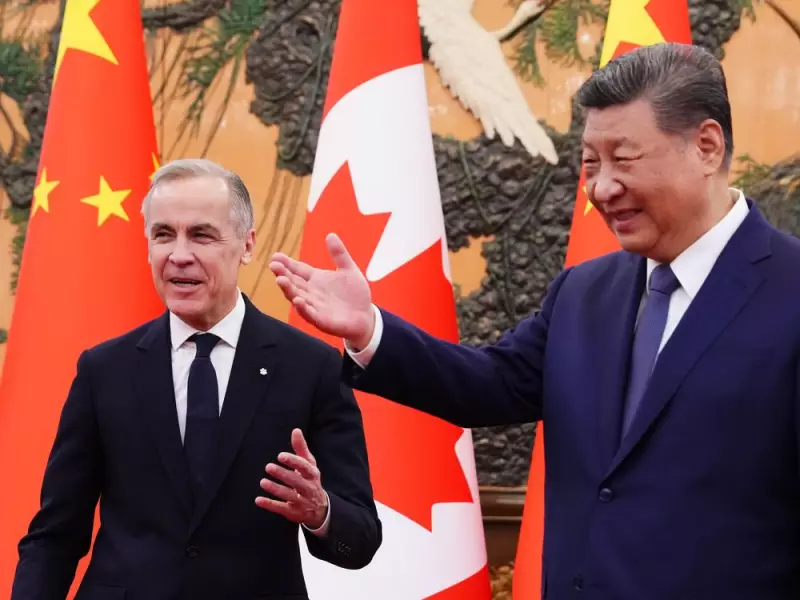
Canada's China Trade Deal Signals New Era of Strategic Adaptation
In a rapidly shifting global trade landscape, Canada finds itself at a critical juncture where adaptation is no longer optional but essential for economic survival. As Prime Minister Mark Carney emphasized during his recent Davos appearance, the world of international commerce has undergone radical transformation in recent months. With two-thirds of Canada's economy dependent on import and export activities, the nation cannot afford to remain stagnant in these turbulent waters.
The Cybersecurity Challenge in Electric Vehicles
One of the most pressing concerns emerging from Canada's renewed engagement with China involves cybersecurity, particularly regarding Chinese electric vehicles. These vehicles have been described as mobile surveillance platforms, containing hundreds of monitoring components both internally and externally. The potential vulnerabilities—how these systems might be accessed, monitored, compromised, or even weaponized—remain largely unknown and unaddressed.
Canada has an opportunity to establish leadership in this domain by developing comprehensive North American data standards and cybersecurity safeguards for the electric vehicle sector. This approach aligns with recommendations made in Senate reports dating back to 2018, suggesting a long-standing recognition of these emerging threats.

Environmental and Economic Considerations
The affordability argument for Chinese electric vehicles often centers on providing eco-conscious consumers with cheaper alternatives. However, this perspective overlooks significant environmental realities. Chinese manufacturing processes for essential materials like steel and aluminum rely heavily on carbon-intensive, coal-fired production methods—some of the most environmentally damaging industrial practices globally.
Meanwhile, Canada's domestic automotive industry ranks among the world's greenest manufacturers. To maintain balance and protect environmental standards, the Canadian government may need to implement carbon border adjustment mechanisms or tariffs on products that appear cheaper precisely because they fail to meet the stringent environmental standards upheld by domestic producers.
Employment Implications and Manufacturing Concerns
The potential impact on Canadian jobs remains uncertain as trade negotiations progress. It remains unclear whether increased access for Chinese electric vehicles would mean primarily importing finished goods or establishing Chinese-owned manufacturing operations within Canada. If the outcome leans toward finished product imports, Canadian workers in aluminum, steel, and automotive manufacturing could face deteriorating conditions and increased market chaos.
A potential solution might involve requiring Chinese companies seeking Canadian market access to invest in local manufacturing infrastructure, creating a more balanced approach that benefits both trade partners while protecting domestic employment.
Navigating Complex Trade Relationships
Any deepening of Canada-China economic integration will inevitably raise concerns in the United States regarding rules of origin under the Canada-U.S.-Mexico Agreement (CUSMA). American officials will scrutinize how parts and materials from China might enter North American supply chains, ensuring Canada doesn't become a backdoor entry point to the U.S. market.
Given that the United States remains Canada's largest and most crucial trading partner, with shared continental interests at stake, Canadian policymakers must carefully consider American concerns while pursuing new opportunities with China.
The Need for National Unity in Trade Strategy
Underlying these complex trade considerations lies a fundamental question about Canadian unity. Can the nation succeed economically if internal divisions—premier against premier, region against region, sector against sector—continue to undermine cohesive policy development? China demonstrates strategic awareness when applying pressure to Canada's agricultural sector during manufactured goods negotiations, while U.S. Treasury Secretary Scott Bessent's references to separatist sentiment in Alberta reveal how external actors might exploit domestic divisions.

As Matthew Holmes articulates, Canada must develop both leverage and options in this new trade reality. The nation faces difficult choices about balancing values with practical economic considerations, requiring strategic trade-offs that maximize value while navigating the complex waters of 21st-century international commerce.





