

In a significant forecast for global commerce, Bank of America's top executive has projected a cooling of international trade tensions under the Trump administration in the coming year. Chairman and CEO Brian Moynihan anticipates a shift towards de-escalation in 2026, following a period of economic disruption triggered by sweeping tariffs implemented in 2025.
From Shockwaves to a Predicted Thaw
Speaking in a pre-recorded interview for CBS News' Face the Nation that aired in late December 2025, Moynihan outlined a changing landscape. He stated that Bank of America's analysis now points toward "de-escalation, not escalation" in the trade arena. This outlook follows a year where the U.S. economy felt significant reverberations from new tariff policies.
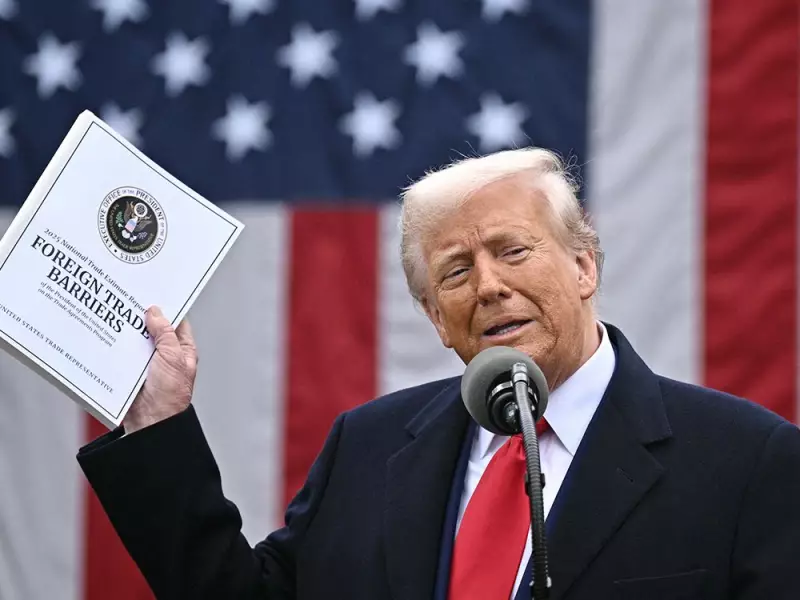
The shift began in April 2025, when former President Donald Trump announced a baseline 10 per cent tariff on all exports to the United States. This was followed by a further slate of tariffs in July, which analysts predicted would push the average rate for major trading partners to approximately 15.2 per cent if fully enacted. According to Bloomberg Economics, the average U.S. tariff rate skyrocketed to 14 per cent from a mere two per cent after Trump's return to the White House.

The New Tariff Landscape and Its Impact
Moynihan elaborated that the current expectation is for an average tariff rate of around 15 per cent, with higher rates reserved for nations unwilling to commit to U.S. purchase agreements or to lower non-tariff barriers. "To go from a 10 per cent across-the-board to 15 per cent for the broad base of countries — not a huge impact," Moynihan remarked, characterizing this as the beginning of a de-escalation phase.
However, he highlighted important exceptions. China remains a "different question" entirely. Furthermore, the situation for North American partners is distinct, with a scheduled review of the Canada-United States-Mexico Agreement (CUSMA) looming in 2026. "But broadly in the world, you can see sort of the endpoint here," he concluded, suggesting a stabilization of policy for many nations.
Broader Concerns for Business and Canada
The CEO acknowledged that the tariff hikes and associated policy uncertainty notably affected small businesses in the second quarter of 2025, though some pressure eased as rates moderated. Interestingly, Moynihan noted that for small businesses today, tariffs have been surpassed by other pressing concerns.
He identified uncertainty over labour availability as a primary worry, attributing this in part to Trump administration immigration policies that "haven't settled in yet." This insight points to a complex business environment where trade policy is just one of several volatile factors influencing operations and planning, particularly for firms with cross-border supply chains that are vital to the Canadian economy.
For Canadian exporters and policymakers, Moynihan's prediction offers a cautiously optimistic signal. While the specific outcome of the CUSMA review remains a critical unknown, the suggestion of a broader global de-escalation could provide a more predictable framework for international trade planning in 2026 and beyond.






