

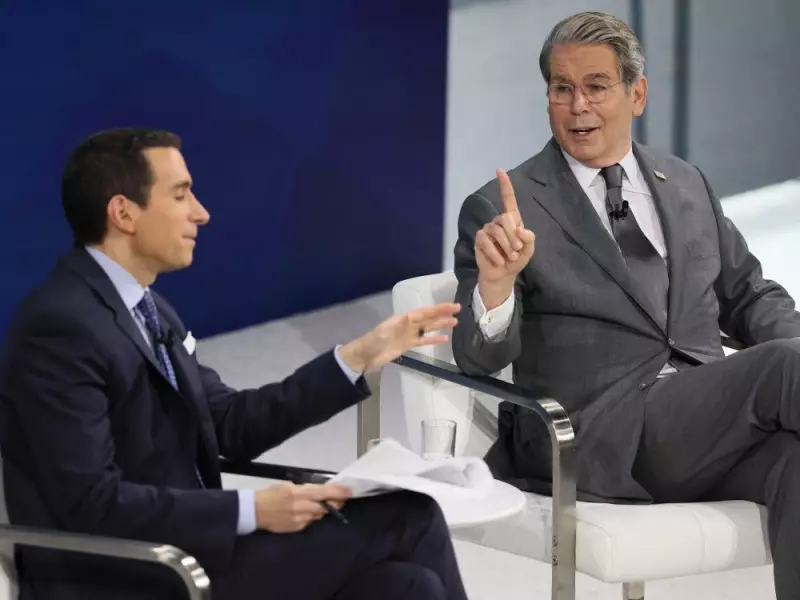
U.S. Treasury Secretary Scott Bessent has declared that former President Donald Trump will retain the power to impose tariffs on foreign goods, even if the U.S. Supreme Court rules against the administration's current legal justification for the levies.
Alternative Legal Avenues for Tariffs
Speaking at the New York Times DealBook Summit on Wednesday, December 3, 2025, Bessent outlined specific sections of the 1962 Trade Act that he argued would provide continued authority. He told host Andrew Ross Sorkin that the administration could "recreate the exact tariff structure" using Sections 301, 232, and 122 of the act.
While Section 122 limits tariff powers to 150 days, the other sections offer more flexible time frames. This assertion comes as the Supreme Court deliberates on a case challenging Trump's use of the International Emergency Economic Powers Act (IEEPA) to authorize import duties. The court heard arguments on November 5, and a ruling is anticipated before the end of the month.

A Potential "Loss for the American People"
Bessent stated he remains "optimistic" about a favorable ruling for the administration. However, he issued a stark warning about the potential consequences of an adverse decision. "Everyone says it will be a loss for the administration," Bessent said. "I think it'll be a loss for the American people."
He defended the tariffs as essential tools to rebalance trade, revive domestic manufacturing, and combat crises like fentanyl trafficking from China. Bessent argued that the IEEPA authority was crucial for negotiations, questioning, "if the fentanyl crisis wasn't an emergency … then what was?" He credited the tariffs with prompting what he called a "robust effort" from China to address the fentanyl issue.
Legal Challenges and Corporate Backlash
The legal battle has significant financial stakes. Last week, retail giant Costco joined a growing list of companies and Democratic state officials suing the U.S. government for tariff refunds should the Supreme Court invalidate Trump's use of IEEPA. These lawsuits, initiated since late October, seek to recover billions paid under the contested tariffs.
In September, the Trump administration's Solicitor General, D. John Sauer, warned the justices that striking down the tariff authority would expose the nation to trade retaliation and thrust America back to the "brink of economic catastrophe." Lower courts have previously ruled that the IEEPA does not clearly grant the president the power to levy import duties.
The impending Supreme Court decision will be a pivotal moment for U.S. trade policy, determining the legal boundaries of presidential power in imposing economic measures deemed to be in the national interest.






