Prime Minister Mark Carney is facing intensified scrutiny over his approach to trade negotiations with the United States, as a wave of layoffs linked to American tariffs underscores the economic pain spreading across Canadian industries. The political debate in Ottawa has been ignited by the announcement of 1,000 job cuts at Algoma Steel, a move that highlights the tangible consequences of stalled talks with the Trump administration.
Mounting Job Losses Amid Political Posturing
The situation reached a critical point just before Christmas when Algoma Steel revealed plans to lay off more than a third of its workforce. This development is not an isolated incident but part of a broader pattern of economic disruption. In Ontario alone, it is estimated that over 40,000 manufacturing jobs have been lost this year due to tariff-related pressures. With the Algoma announcement, that grim tally now exceeds 41,000.
Other major companies have also been forced to make difficult decisions. General Motors eliminated the third shift at its Oshawa assembly plant, while Holsag Furniture in Lindsay, Ontario, is laying off over 130 employees and relocating its operations to the United States in March. These stories are being replicated in communities nationwide, painting a picture of an industrial sector under severe strain.

A Prime Minister's Dismissive Remarks
The economic crisis has cast a harsh light on Prime Minister Carney's recent comments regarding communication with President Trump. While attending G20 meetings in South Africa in late November 2025, Carney was asked when he last spoke to the U.S. President. He responded with apparent contempt, stating, “Who cares? I mean, it’s a detail. It’s a detail. I spoke to him. I’ll speak to him again when it matters.”
Critics argue that it mattered then and matters profoundly now. The U.S. has imposed punishing tariffs on key Canadian exports: 50% on steel and aluminum, 35% on softwood lumber, and 25% on autos and auto parts. These measures have directly contributed to the closure of production lines and the loss of tens of thousands of jobs.
Political Gamesmanship vs. Economic Leadership
Analysis suggests that Carney's reluctance to actively pursue talks with Trump may be influenced by domestic politics. His confrontational stance appears to resonate with a segment of the electorate, particularly older, retired Canadians over 55 who form a core part of his current support base and are less likely to be directly impacted by manufacturing layoffs.
Meanwhile, the official opposition has also faced criticism for its response. Conservative Leader Pierre Poilievre, while raising the issue of job losses in Parliament, opted not to directly challenge Carney on his failure to secure a trade deal during a recent question period. Instead, his approach has been characterized by observers as an attempt to score political points, a tactic that Carney himself has engaged in during exchanges.
This political maneuvering occurs against a backdrop of real-world hardship for thousands of families. The Liberal government's talking point—that not engaging with Trump constitutes a strategic masterstroke—is viewed by many analysts as disconnected from the economic reality facing workers in Sault Ste. Marie, Oshawa, Lindsay, and beyond.
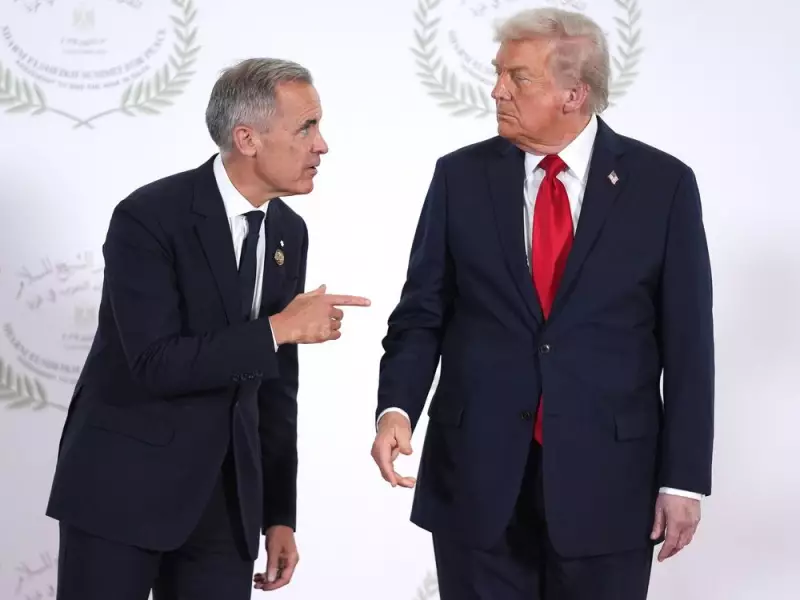
A potential opportunity for dialogue arises this Friday, as Carney is scheduled to be in Washington with President Trump for the World Cup draw. Observers note that Trump has shown a personal liking for Carney, a dynamic the Prime Minister could potentially leverage to restart substantive negotiations.
For now, the central question remains whether Ottawa can move beyond political point-scoring to provide the serious leadership required to defend Canadian jobs and industries in the face of an aggressive American trade policy.