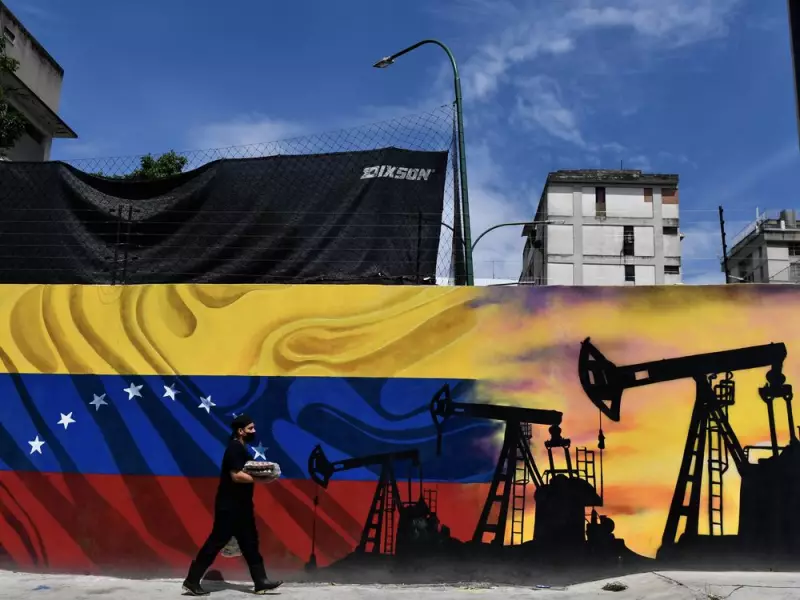
Venezuela presents a stark paradox in the global energy equation. The South American nation sits atop the world's largest proven oil reserves, estimated at 303 billion barrels, or roughly 17% of the global total. Yet, its current output tells a different story, with production languishing below 1 million barrels per day. This is a dramatic fall from its historical peak of approximately 3.4 million barrels per day in 1998.
The Chasm Between Potential and Reality
The gap between Venezuela's immense resource wealth and its meager production is the result of a complex web of technical, economic, and political constraints. A primary challenge is the nature of its crude: most Venezuelan oil is extra-heavy and highly viscous. To be transported and exported, it must be blended with lighter hydrocarbons, a process requiring specific infrastructure and investment.
Decades of mismanagement, underinvestment, and a lack of access to international capital have left the country's oil infrastructure in severe disrepair. Compounding these issues are United States and international sanctions, coupled with prolonged domestic political instability. These factors have crippled Venezuela's ability to attract the foreign investment and technical expertise necessary to revive its oil sector.

Global Implications and Market Realities
Venezuelan crude is not easily replaceable on the global stage. It is particularly crucial for producing diesel, asphalt, and fuels for heavy equipment—products already in short supply globally due to sanctions on Russia and Venezuela itself. U.S. lighter crude grades cannot directly substitute for these heavy, sour barrels. A further reduction in Venezuelan exports would exacerbate existing global diesel shortages.
Despite this, analysts conclude that Venezuela's immediate impact on global oil markets will be incremental at best. Its exports are already at a low baseline, and most complex refineries have adapted to source heavy crude from alternative suppliers, albeit often at a higher cost. The OPEC+ alliance of oil producers has not prioritized Venezuela in recent discussions, as the country has long operated outside effective production quotas due to its severe capacity constraints.
A Long Road to Recovery
Recent geopolitical events, including the U.S. detention of Venezuela's former leader Nicolás Maduro and statements from former U.S. President Donald Trump about potential investment, have sparked speculation about change. However, U.S. sanctions on Venezuelan crude remain a significant barrier. Experts point to precedents like Iraq in 2003 and Libya in 2011, warning that regime change can lead to fragmented control, raising risk premiums for investors and further constraining the market for heavy sour crude.
Any meaningful recovery hinges on political developments and the establishment of a stable, credible regime that can attract the massive capital investment required. Restoring production to former levels would take years and billions of dollars. Consequently, while Venezuela's oil sector holds significant long-term potential, its ability to influence global supply in the short to medium term remains severely limited, offering no quick fix to tight market conditions.