The recent political shift in Venezuela, orchestrated by U.S. President Donald Trump, has ignited a fresh and urgent economic threat to Canada's energy sector, according to analyst Adam Pankratz. The removal of Nicolás Maduro has opened a new front in what Pankratz describes as an economic assault, indirectly targeting the heart of Canada's oil industry.
The Looming Venezuelan Giant
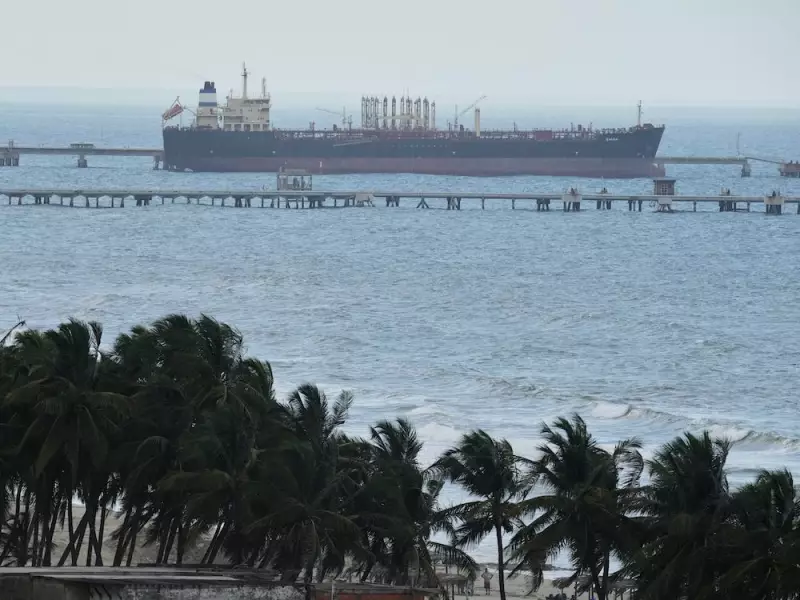
Venezuela possesses the world's largest proven oil reserves, estimated at a staggering 303 billion barrels. Crucially, the oil from its Orinoco Belt is an extra-heavy crude, chemically similar to the bitumen extracted from Alberta's oil sands. This similarity is a double-edged sword. Historically, until 1997, Venezuela was the top exporter of this heavy crude to refineries on the U.S. Gulf Coast. That dominance waned after Hugo Chávez's election in 1999, which led to increased prices and royalties.
Years of sanctions and profound mismanagement under Maduro crippled Venezuela's output. Production plummeted from over 3.5 million barrels per day in the 1970s to under 1 million barrels per day today, a victim of infrastructure decay. In stark contrast, Alberta's production has soared from roughly 200,000 barrels per day in the 1980s to nearly 3.5 million today.

Why Refinery Compatibility is Canada's Current Shield
Pankratz explains that not all oil is equal, and this distinction has protected Canadian exports until now. U.S. Gulf Coast refineries are specifically engineered to process heavy crudes like those from Alberta and Venezuela. This technical reliance is why, despite trade tensions, Alberta oil has consistently avoided U.S. tariffs. Switching these refineries to handle lighter shale oil would require billions of dollars and several years.
However, this shield is fragile. "If there were another reliable source of heavy crude for U.S. refineries, then Canadian crude would not be nearly as valuable," Pankratz warns. The core of the vulnerability is Canada's lack of diversified market access, with over 80% of export pipeline capacity flowing south, forcing Canadian producers to sell at a discount.
A Narrow Window for Canadian Action
The threat materialized swiftly when Trump declared the U.S. would "run" Venezuela and directed American oil companies to invest billions to repair its broken infrastructure. This announcement should trigger immediate economic alarm in Ottawa, Pankratz asserts, as a successful revival could deliver a massive blow to Canada's oil industry and its already sluggish economy.
The sole mitigating factor is time. Venezuela's oil infrastructure is in such disrepair that a return to full production will take years. This provides Canada with a critical, but closing, window of opportunity. The solution, according to Pankratz, is decisive and rapid diversification.
Canada must break its dependence on the U.S. market by urgently constructing at least one, and ideally more, pipelines to its coasts. Tidewater access would allow Canadian oil to compete on the global market, securing a fair price and negating the strategic advantage a resurgent Venezuela would hold. The message is clear: Canada's energy future hinges on its ability to act before this new competitor is back online.