The persistent narrative of oil's demise, often championed by certain commentators in Canada, is being starkly contradicted by recent global events. The logic that Canada should leave its immense petroleum wealth untapped is now facing a powerful counter-argument rooted in urgent economic necessity and shifting international dynamics.
Global Shift Prompts Canadian Energy Reckoning
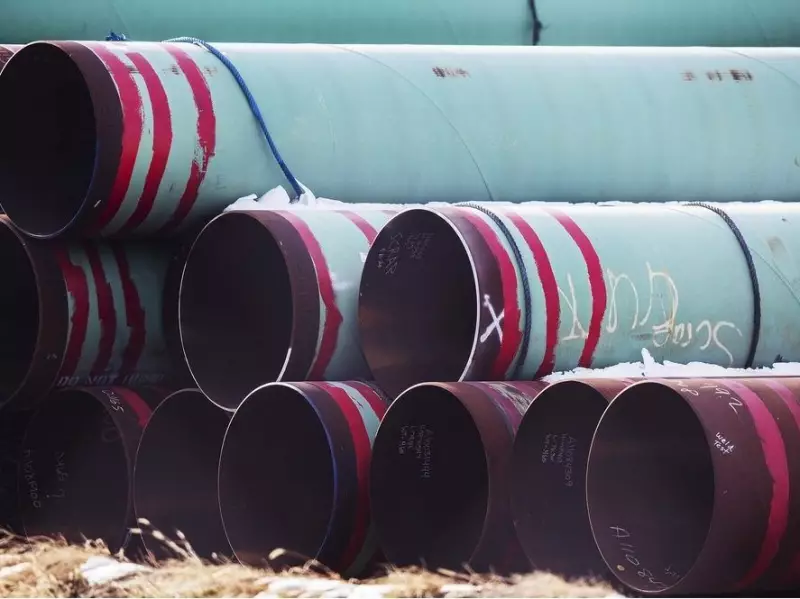
The catalyst for this renewed urgency is the action by U.S. President Donald Trump. His administration's takeover of Venezuela's oil sector has fundamentally altered the continental energy landscape. This move amplifies the critical need for Canada to construct new pipeline infrastructure—or multiple pipelines—from Alberta's oilsands to tidewater on the West Coast. The objective is clear: enable direct access to Asian markets via oil tankers, breaking an over-reliance on a single buyer.
Despite being the world's fourth-largest producer and exporter of crude oil, Canada's market access is severely limited. A staggering 97% of Canadian oil exports are sold to the United States, often at a significant price discount. This captive market scenario has been estimated to cost the Canadian economy up to $20 billion in foregone revenues annually, a massive financial drain that new export routes could help stem.

The Stakes: Comparing Global Oil Reserves
The strategic importance of Venezuela in this equation cannot be overstated. The nation sits atop the world's largest proven oil reserves, estimated at 303 billion barrels. In comparison, Canada holds the fourth-largest reserves globally at 163 billion barrels, trailing Venezuela, Saudi Arabia (267 billion), and Iran (209 billion).
However, decades of economic nationalization, mismanagement, and under-investment have crippled Venezuela's production capacity. Its output has plummeted to roughly one million barrels per day, less than a third of its historical peak. The potential revitalization of this sector by U.S. industry expertise poses a direct long-term challenge to Canada's dominant position as the primary foreign supplier to the American market.
Time is of the Essence for Infrastructure
Reviving Venezuela's oil industry will be a lengthy process, but so too is building major energy infrastructure in Canada. This reality makes immediate action imperative. The economic rationale for new pipelines, as outlined in the memorandum of understanding between Prime Minister Mark Carney and Alberta Premier Danielle Smith, was already compelling. The recent developments in Venezuela, following the U.S. intervention and the capture of President Nicolas Maduro, have transformed that rationale into an urgent national priority.
The situation demands a pragmatic reassessment from all quarters. It highlights a fundamental truth: no other resource-rich nation would voluntarily choose to stifle its own economic potential by deliberately keeping its vast oil and natural gas resources locked underground. For Canada, the path forward is now clearer and more pressing than ever—developing the capacity to compete on the global stage is not just an economic opportunity, but a strategic necessity.