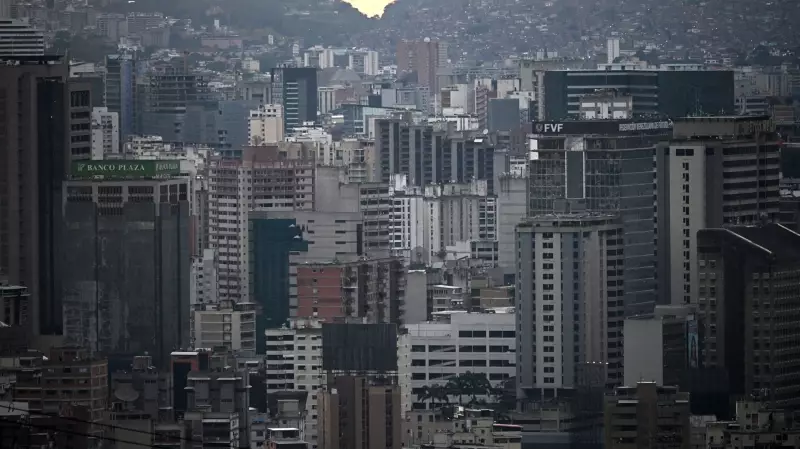
The dramatic capture of Venezuelan President Nicolás Maduro in a U.S. military raid and former President Donald Trump's subsequent plan to seize control of the country's oil industry are unlikely to trigger an immediate shift in global oil prices, according to analysts. While the long-term potential is vast, the immediate reality is an industry crippled by decay and requiring massive, long-term investment.
The Daunting State of Venezuela's Oil Infrastructure
Venezuela's oil output has plummeted to about 1.1 million barrels per day, a stark fall from its peak of 3.5 million barrels daily in 1999. This collapse is the result of years of mismanagement, corruption, and stringent international sanctions. Patrick De Haan, lead petroleum analyst at GasBuddy, emphasized that while infrastructure wasn't damaged in the recent raid, "it has been decaying for many many years and will take time to rebuild."
Francisco Monaldi, director of the Latin American Energy Program at Rice University, provided a sobering forecast. He estimates that boosting production back to historic levels of around 4 million barrels per day would take approximately a decade and require a staggering $100 billion in investment. The primary hurdle is not the oil itself—Venezuela sits on the world's largest proven crude reserves of 303 billion barrels—but the political and contractual uncertainty that has scared away foreign capital since Hugo Chávez's nationalization in 2007.

Market Reaction and Global Implications
With oil markets closed over the weekend, no immediate price impact was recorded, and analysts do not anticipate a major shift upon reopening. Venezuela is an OPEC member, so its current diminished output is already factored into global supply calculations, which currently show a surplus.
However, the long-term potential is significant. Phil Flynn, a senior market analyst at Price Futures Group, noted that if the U.S. can establish a stable environment, optimism could surge. "That could cement lower prices for the longer term," Flynn said, adding that a revitalized Venezuelan industry could also apply pressure on Russia by providing alternative sources of heavy crude oil and diesel fuel.
Venezuela's heavy crude is a key global commodity for producing diesel, asphalt, and fuels for heavy equipment. Sanctions on both Venezuela and Russia have created a shortage, and U.S. Gulf Coast refineries, built for such crude, would operate more efficiently with renewed access to Venezuelan supplies.
Corporate Caution and Legal Complexities
Major international oil companies are watching developments cautiously. Chevron, the only U.S. firm with significant ongoing operations in Venezuela producing roughly 250,000 barrels a day, did not immediately comment. ConocoPhillips stated it was "monitoring developments" but called it "premature to speculate on any future business activities."
The legal landscape presents another layer of complexity. Matthew Waxman, a Columbia University law professor and former Bush administration national security official, warned that seizing control of Venezuela's resources opens contentious legal questions. "An occupying military power can’t enrich itself by taking another state’s resources," Waxman noted, though he acknowledged the current administration's dismissive stance toward international law in the Venezuelan context.
The political situation in Caracas remains fluid. While Trump declared the United States in charge, Venezuela's high court ordered Vice President to assume the role of interim president, setting the stage for continued uncertainty. For American companies, this instability is the biggest barrier to committing the billions needed to resurrect what was once a powerhouse of global oil production.