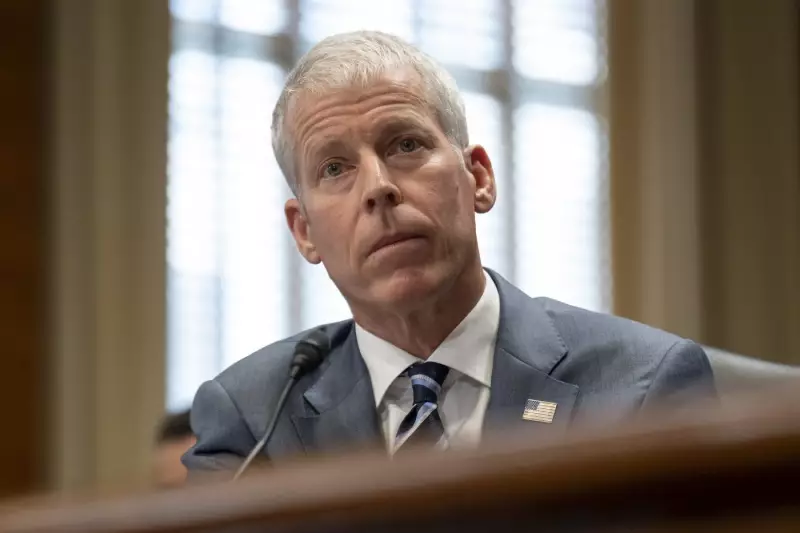
In a significant declaration with far-reaching implications for global energy markets, U.S. Energy Secretary Chris Wright has announced that the United States government intends to maintain its control over Venezuela's crucial oil sales for the foreseeable future. The statement, made on January 7, 2026, signals a prolonged and assertive U.S. stance on the South American nation's primary economic engine.
A Policy of Indefinite Oversight
Secretary Wright's use of the term "indefinitely" marks a clear hardening of the American position. This move extends beyond temporary sanctions or conditional agreements, positioning Washington as the long-term arbiter of Caracas's ability to sell its oil on the international market. The policy effectively allows the U.S. to dictate which countries and entities can purchase Venezuelan crude and under what terms, wielding substantial influence over the country's revenue stream.
The announcement comes amidst a complex geopolitical landscape where global oil supplies remain a focal point of economic and political strategy. By controlling the spigot on one of the world's largest proven oil reserves, the U.S. administration gains a powerful tool for applying diplomatic pressure.

Context and International Reaction
This policy of indefinite control is not an isolated action but part of a broader, more confrontational U.S. approach towards the Venezuelan government. The stance has drawn criticism from some quarters, including a former Canadian envoy who recently accused Ottawa of "parroting" what they termed an anti-democratic U.S. strategy. The decision places allied nations, including Canada, in a position where they must navigate between supporting a key ally's foreign policy and their own energy and trade interests.
For Venezuela, the implications are severe. Oil exports constitute the overwhelming majority of the nation's foreign currency earnings. Prolonged and strict U.S. oversight threatens to cripple the country's already fragile economy, limiting its ability to fund imports and government services, and potentially exacerbating the ongoing humanitarian crisis.
Implications for Global Energy Markets
The ripple effects of this policy will be felt in oil markets worldwide. Traders and analysts will now have to factor in permanent U.S. oversight of Venezuelan production into their long-term price forecasts and supply models. It introduces a new layer of political risk into the market, potentially leading to increased volatility depending on how the controls are implemented and enforced.
Furthermore, it could push other major oil-consuming nations to accelerate diversification efforts, seeking more secure or politically stable suppliers. Conversely, it may also create opportunities for other oil-producing countries to fill any gaps left by restricted Venezuelan barrels, albeit at a potentially higher price for consumers.
The announcement by Energy Secretary Chris Wright represents a definitive shift, transforming what were often seen as temporary sanctions into a permanent feature of U.S.-Venezuela relations. The move underscores the Biden administration's willingness to use energy dominance as a core instrument of foreign policy, with consequences that will unfold in boardrooms and capitals across the globe for years to come.