U.S. Military Airlifts Small Reactor as Trump Pushes to Quickly Deploy Nuclear Power
In a significant demonstration of advancing energy capabilities, the U.S. military has conducted an airlift of a small nuclear reactor, underscoring a strategic push to rapidly deploy nuclear power. This move aligns with former President Donald Trump's renewed advocacy for expanding nuclear energy to enhance national security and energy independence.
Strategic Airlift and High-Level Oversight
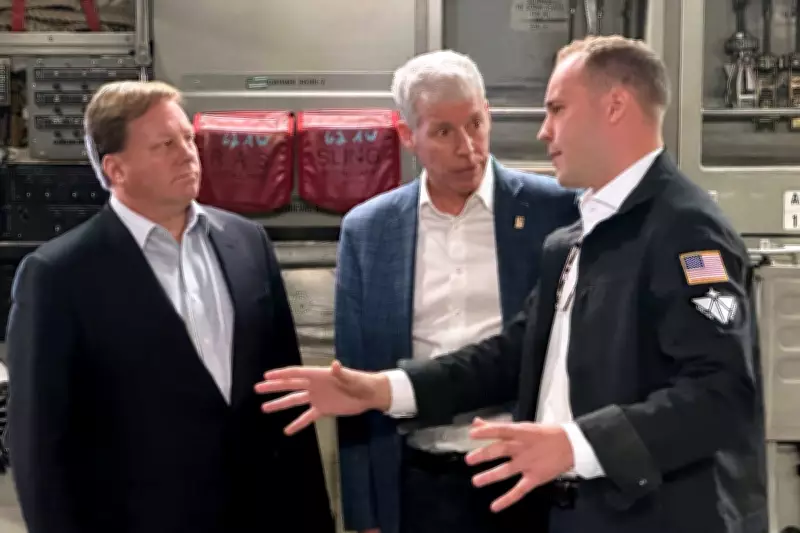
The airlift operation featured a C-17 transport aircraft carrying a microreactor developed by Valar Atomics, a company specializing in compact nuclear technology. Onboard during the flight were key government officials, including Energy Secretary Chris Wright and Under Secretary of Defense Michael Duffey, who observed as Isaiah Taylor, CEO of Valar Atomics, discussed the reactor's potential. This high-level involvement highlights the importance placed on integrating nuclear power into military and commercial applications.
The microreactor is designed to provide reliable, portable power for remote military installations and disaster response scenarios, reducing reliance on traditional fuel supplies. Its development represents a shift toward more agile and resilient energy solutions in defense operations.

Trump's Push for Nuclear Expansion
This initiative comes amid Trump's vocal support for accelerating nuclear power deployment across the United States. He has emphasized the need to reduce dependence on foreign energy sources and bolster domestic infrastructure, framing nuclear energy as a cornerstone of economic and military strength. The airlift serves as a tangible step in realizing these goals, showcasing the feasibility of quickly mobilizing nuclear technology.
"The ability to airlift such technology demonstrates our commitment to innovation and preparedness," noted an unnamed defense official. "It's about ensuring our forces have uninterrupted power, no matter where they are deployed."
Implications for Energy and Defense
The deployment of microreactors could revolutionize how the military manages energy logistics, offering several advantages:
- Enhanced Mobility: Small reactors can be transported by air, enabling rapid setup in conflict zones or during humanitarian missions.
- Reduced Carbon Footprint: Nuclear power provides a low-emission alternative to diesel generators, aligning with environmental goals.
- Cost Efficiency: Over time, these reactors may lower operational costs by decreasing fuel transportation needs.
Commercial applications are also being explored, with Valar Atomics aiming to supply clean energy to remote communities and industrial sites. This dual-use approach could spur broader adoption of nuclear technology in the private sector.
Challenges and Future Outlook
Despite the promise, challenges remain, including regulatory hurdles, public safety concerns, and the need for robust security measures. However, proponents argue that advanced designs and strict protocols mitigate these risks, paving the way for wider acceptance.
As Trump continues to advocate for nuclear power, similar demonstrations are expected to follow, potentially shaping energy policy and defense strategies in the coming years. The successful airlift marks a pivotal moment in the quest for decentralized, resilient power sources.
In summary, the U.S. military's airlift of a microreactor underscores a concerted effort to fast-track nuclear power deployment, driven by Trump's vision for energy sovereignty and military readiness. This development signals a new era in portable energy solutions with far-reaching implications for both national security and civilian infrastructure.