Iran has indicated that transit through the Strait of Hormuz will return to normal once security conditions are restored, following U.S. President Donald Trump's visit to China, which resulted in a shared desire to reopen the critical maritime route but little concrete progress on achieving that goal.
Iran's Stance on the Waterway
Iran has shown limited interest in relinquishing its control over the strait, insisting on maintaining a degree of authority even after the conflict ends. Tehran's threats against ships in the Persian Gulf have nearly halted exports from the oil-rich region, driving energy prices higher and giving Iran significant leverage in negotiations with the United States.
Iranian President Masoud Pezeshkian stated, as reported by the semi-official Mehr news agency: "Naturally, once the current state of insecurity is resolved, navigation conditions in the Strait of Hormuz will return to normal." He added that Iran will implement effective monitoring and control mechanisms within the framework of international law, without providing specifics, and reaffirmed Iran's commitment to a diplomatic resolution.

China's Role and U.S. Sanctions
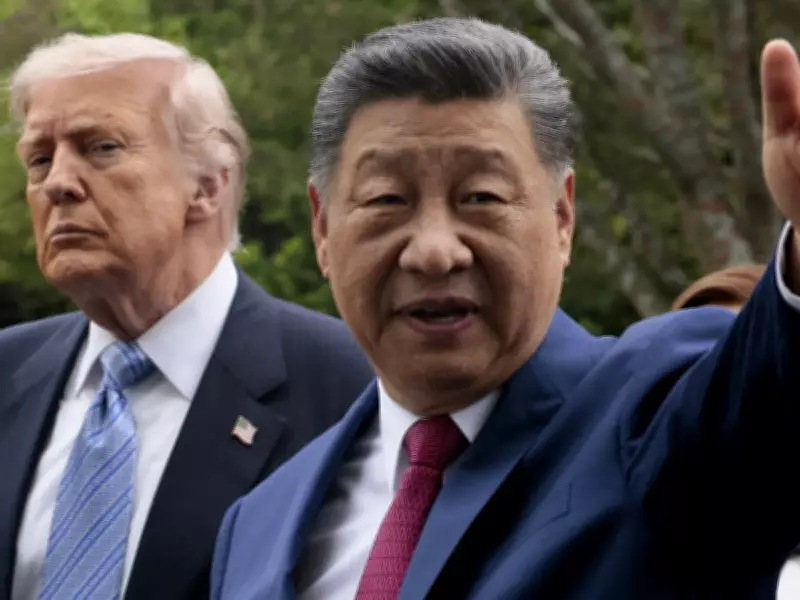
Chinese Foreign Minister Wang Yi called for the strait to be opened to shipping as soon as possible, according to state-run Xinhua News Agency. This statement came as the world's two largest economies sought to highlight areas of agreement on the Middle East conflict during Trump's meetings with President Xi Jinping, despite being on opposing sides—China has repeatedly criticized the U.S.-Israeli attack on its Iranian ally.
In response to Iran's disruption of shipping, the U.S. imposed a blockade on Iranian oil exports to cut off its economic lifeline and pressure Tehran into agreeing to U.S. terms for a peace deal. On his return from China, Trump told reporters he discussed with Xi the possibility of lifting sanctions on Chinese oil companies that purchase Iranian crude. The Treasury Department has escalated these penalties in recent weeks to pressure Iran into talks, but Beijing has ordered its companies to ignore the sanctions.
Trump's Decision and Tanker Movements
"I'm going to make a decision over the next few days," Trump said aboard Air Force One when asked about lifting sanctions. "We did talk about that." In an interview with Fox News, Trump claimed that three Chinese tankers that traversed the Strait of Hormuz loaded with Iranian oil this week did so because the U.S. allowed it. Iranian state TV had previously reported that over 30 ships had been permitted passage through the strait since Wednesday night, citing an official from the Islamic Revolutionary Guard Corps' navy.
The White House faces a dilemma: how to reopen the strait, lower global energy prices, and wind down an increasingly unpopular conflict that has caused the largest oil supply disruption in history, all ahead of midterm elections in November.