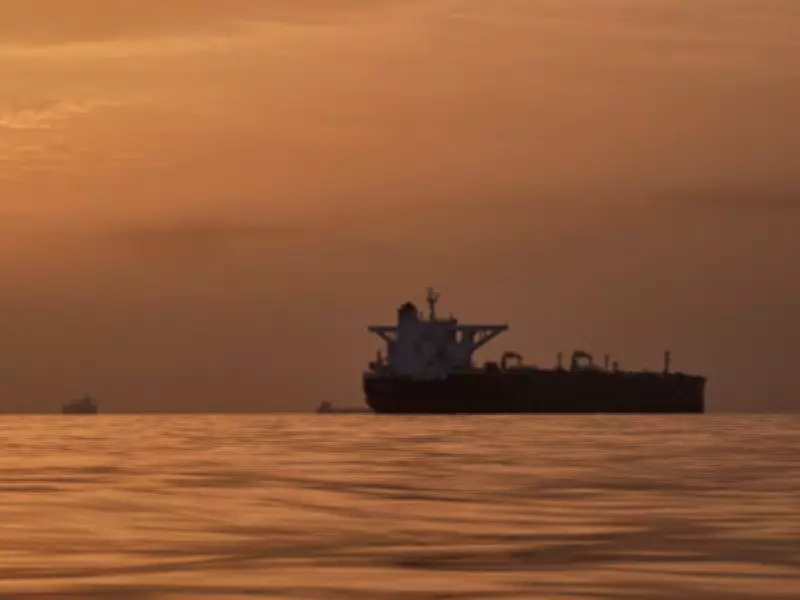
The Strait of Hormuz, a critical maritime corridor for global oil and gas shipments, has become virtually impassable for the first time in history, marking an unprecedented disruption that could reshape the global oil trade for months. Daily transits, which averaged 135 under normal conditions, have fallen to near zero following a series of escalating actions between the United States and Iran.
Escalating Conflict and Blockade
In early April, U.S. President Donald Trump declared intentions to reopen the strait, stating that with “a little more time, we can easily OPEN THE HORMUZ STRAIT, TAKE THE OIL, & MAKE A FORTUNE.” However, three weeks later, transits have become virtually impossible. Trump imposed a U.S. blockade targeting Iran-linked vessels, while Tehran responded by deploying its “mosquito fleet” of gunboats to close the waterway. Shipowners now estimate that a return to normal shipments is months away at best.
Impact on Vessel Operations
For weeks, vessel owners and crews faced significant challenges attempting to exit the Persian Gulf. The Islamic Revolutionary Guard Corps tightened control over the strait, and U.S. warships began interdicting vessels, even far from the region. Iranian gunboats have become increasingly unpredictable, reacting to the heightened military presence. Several shipping officials in the region noted that the U.S. blockade has paradoxically increased volatility, as Iran redoubles efforts to keep the strait closed.

“What the U.S. is doing, with its blockade, looks to be expanding the area of risk for ships,” said Rajalingam Subramaniam, CEO of Fleet Management Limited, which has over 400 seafarers trapped inside the gulf. “There’s this posturing going on, and it has actually created more uncertainty.”
Geopolitical and Economic Implications
The Strait of Hormuz serves as a narrow maritime corridor connecting oil and gas producers in the Persian Gulf to global markets. It has become the key flashpoint in the eight-week war with Iran, highlighting the country’s asymmetric ability to impose global economic pain. The conflict has become intractable, with both sides digging in.
“Hormuz is definitely a tool of leverage and a metric of whether Iranian responses are coordinated,” said Rachel Ziemba, senior fellow at the Center for a New American Security. “The U.S. blockade was partly implemented to block Iran’s leverage, but ultimately Iran has some space and recent revenue to buy itself some time.”
Global Economic Consequences
Iran’s resilience is built on years of self-reliance, a regime structured to withstand shocks, and income from recent oil shipments. In contrast, the global economy has less time at its disposal. Each passing day increases the financial impact of the conflict, not only for import-dependent Asia but for the entire world, including the United States. Shortages and price spikes are rippling through energy markets and global supply chains.
Crude output from Persian Gulf nations—some of the world’s most important suppliers—has already fallen 57% below pre-war levels, according to Goldman Sachs analysts led by Daan Struyven. Even after a full reopening of the strait, recovery could take months. “The recovery may be only partial after a prolonged closure,” they wrote in a note last week.