The $20 Billion Carbon Capture Challenge Facing Alberta's Energy Agreement
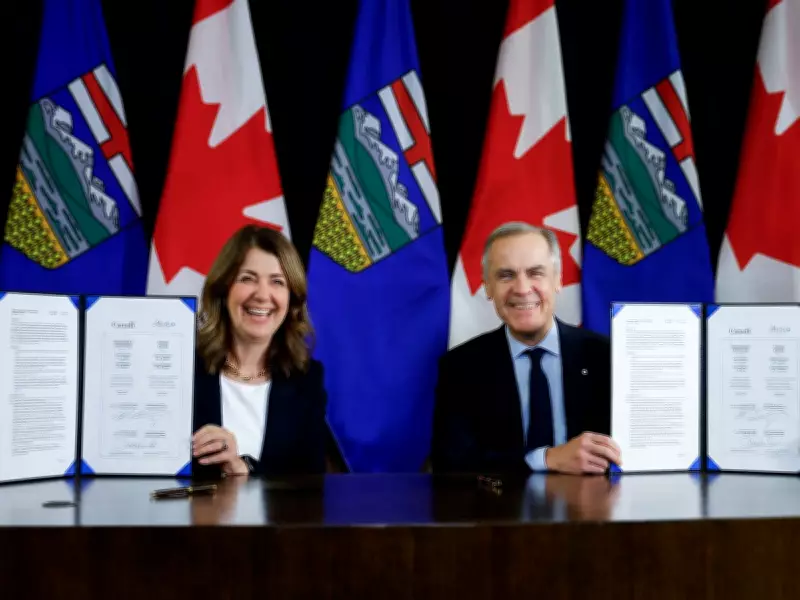
As Alberta Premier Danielle Smith and Prime Minister Mark Carney work to finalize their landmark energy agreement, a massive $20 billion carbon capture project threatens to derail negotiations. The proposed Pathways initiative, which aims to capture emissions from oilsands operations, has become a significant financial obstacle in what was hailed as a historic effort to mend Alberta's strained energy relationship with the federal government.
An Unprecedented Financial Burden
The Pathways Alliance, representing major oilsands companies, has requested that governments cover approximately 75 percent of the project's construction costs, which have recently escalated from initial estimates of $16 billion to $20 billion. This substantial financial demand places considerable pressure on taxpayers and creates a challenging dynamic for the Smith-Carney memorandum of understanding, which was originally signed in November 2025 with an April 1 deadline for finalization.
Keith McLaughlin, partner at New West Public Affairs in Calgary, emphasized the project's unprecedented scale, stating, "The magnitude of this undertaking far exceeds anything proposed in other jurisdictions worldwide." The Pathways network would collect up to 12 million tonnes of carbon dioxide annually from thirteen oilsands facilities in northern Alberta, transporting the emissions 400 kilometers via pipeline to underground storage sites near Cold Lake.

Missed Deadlines and Growing Skepticism
Both Premier Smith and Prime Minister Carney have acknowledged that the April 1 deadline for finalizing the energy agreement will likely be missed, with Smith suggesting a final deal might emerge "in the next few weeks." This delay reflects the complex negotiations surrounding the Pathways project, which many observers have long doubted would ever materialize due to its extraordinary costs and technical challenges.
The carbon capture scheme represents more than just an environmental initiative—it serves as a critical precondition for Smith's ambitions to construct a new oil pipeline to the West Coast. While Carney has expressed support for such infrastructure development, the memorandum clearly establishes that advancing the Pathways project to its initial development phase must precede any pipeline construction.
A Pivotal Moment for Canadian Energy Policy
This energy agreement represents what many consider the most significant effort in decades to reconcile Alberta's energy sector with federal environmental priorities. The proposed "grand bargain" aims to simultaneously address climate concerns while unlocking the province's oil and gas potential through decarbonization technologies.
However, the substantial taxpayer investment required for the Pathways project raises important questions about cost distribution between private industry and public funds. As negotiations continue behind closed doors, the outcome will establish important precedents for how Canada balances environmental responsibility with economic development in its energy sector.
The coming weeks will prove crucial as both governments navigate these complex financial and environmental considerations, with the Pathways project serving as both a potential solution to emissions reduction and a significant obstacle to final agreement.