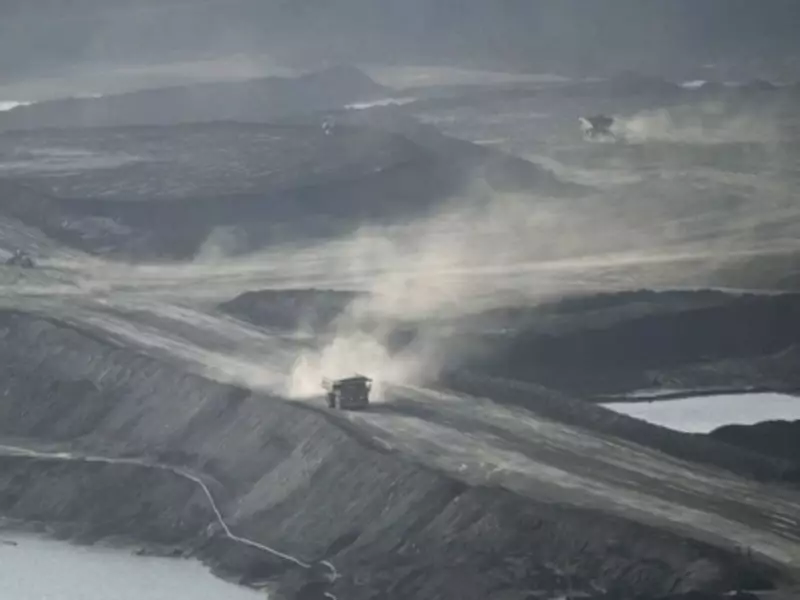
In a bold move against prevailing market trends, Canada's largest oil sands producers are charting a course for increased production in 2026, even as forecasts warn of a deepening global crude surplus and slumping prices.
Major Producers Forecast Output Increases
All four of Canada's biggest integrated oil companies have issued guidance pointing to higher output next year. Cenovus Energy Inc. is leading the charge with a projected increase of approximately 18%. This significant jump is largely attributed to the company's November acquisition of MEG Energy Corp., coupled with expansion initiatives at its existing assets.
The growth strategy is not isolated to Cenovus. Industry giants Canadian Natural Resources Ltd., Suncor Energy Inc., and Imperial Oil Ltd. have all provided production guidance whose midpoints indicate plans to boost their crude output in 2026. This collective stance sets the Canadian sector apart, as it prepares to grow amid a challenging price environment.

Pipeline Capacity Drives Counter-Cyclical Strategy
The driving force behind this expansion is the availability of new pipeline capacity to coastal export terminals. The critical catalyst is the expanded Trans Mountain pipeline system, which began operations last year. According to the pipeline operator, the system is not expected to reach full capacity until 2027, leaving a window of opportunity for producers to fill the available space.
Furthermore, Enbridge Inc. has announced plans to expand its network of pipelines that transport oil sands crude to key markets in the United States. This additional infrastructure provides Canadian drillers with the confidence to ramp up production, aiming to capitalize on the surplus export capacity before it is fully utilized.
Global Context and Market Implications
This planned increase in Canadian production threatens to exacerbate an already precarious global supply situation. The International Energy Agency (IEA) has projected an unprecedented worldwide crude surplus. This forecast has already contributed to a 22% decline in U.S. benchmark oil prices this year, putting 2024 on track for the worst annual performance since 2018.
While the OPEC+ alliance often commands headlines for its supply management, Canada remains a heavyweight in global oil fundamentals. As the world's fourth-largest crude producer, trailing only the United States, Saudi Arabia, and Russia, decisions made in Calgary and Fort McMurray have tangible impacts on international supply dynamics.
The Canadian oil sands sector's decision to grow in the face of a price downturn underscores a strategic focus on long-term infrastructure advantages over short-term market cycles. How this increased supply will interact with weak global demand and OPEC+ policy remains a critical question for energy markets heading into 2026.