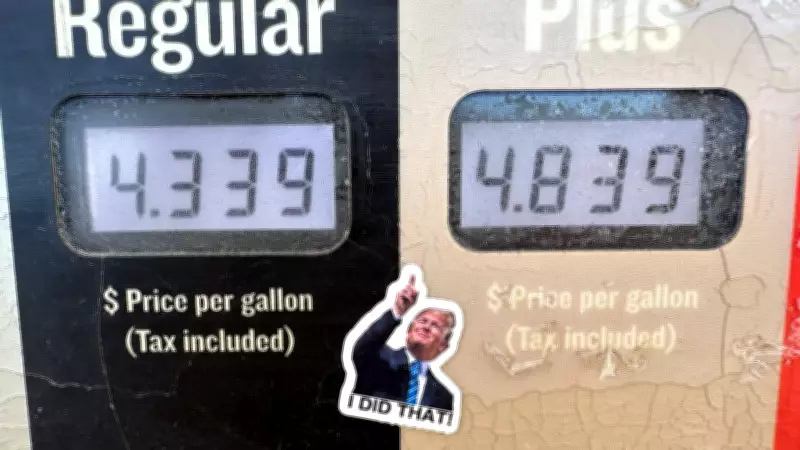
Oil prices surged more than $6 per barrel on Monday following a report from Iran's Tasnim news agency indicating that Tehran's negotiating team has halted message exchanges with the United States. The report also suggested that the allied 'Resistance Front' is considering measures to completely block the Strait of Hormuz and other key waterways, including the Bab el-Mandeb Strait.
Market Reaction
Brent crude futures rose $6.02, or 6.6%, to $97.14 per barrel by 10:02 a.m. ET, while U.S. West Texas Intermediate crude futures climbed $6.68, or 7.7%, to $94.04 per barrel. The sharp gains come after a turbulent May, during which Brent and WTI lost around 19% and 17%, respectively, marking their biggest monthly declines in absolute terms since March 2020, when the COVID-19 pandemic slashed global energy demand.
Geopolitical Context
The report emerges amid ongoing hostilities between Iran and the United States, with both sides having traded strikes. Meanwhile, Israel has ordered troops to advance further into Lebanon in its conflict with the Tehran-backed Hezbollah militant group. The escalation dims hopes for a ceasefire extension, which had been discussed after Washington hosted Israel-Lebanon peace talks on Friday. U.S. President Donald Trump stated on Friday that he would soon decide on a proposed deal to extend the ceasefire announced in early April. Israel's involvement is considered crucial, and Iran has repeatedly insisted that Hezbollah and Lebanon must be part of any agreement. The U.S. has proposed a 'gradual de-escalation' plan, according to a U.S. official on Sunday.

Concerns Over Strait of Hormuz
IG analyst Tony Sycamore noted rising concerns about mines in the Strait of Hormuz, a vital shipping lane for oil and gas. 'Even if an agreement is reached, it won't deliver a flood of supply,' Sycamore said. An Axios report on Friday indicated that Iran had dropped additional mines in the strait last week. Iran's Foreign Ministry spokesperson Esmaeil Baghaei attributed the delay in diplomatic progress to a lack of trust, Washington's contradictory positions, and Israel's attacks on Lebanon.
Supply and Demand Factors
Supply worries outweighed bleak economic data from China, which showed factory activity stalling over the weekend, adding to concerns about slowing momentum in the world's second-largest economy. Saudi Arabia is expected to cut its official selling prices for crude oil to Asia in July for a second consecutive month, according to a Reuters survey. In Russia, the government plans to increase fuel supplies from Belarus and tighten oversight of gasoline and diesel exports to meet domestic demand, as reported by RBC. A complete ban on gasoline exports for two months, including under some inter-governmental agreements, is under discussion. Kazakhstan has restored its oil production to 290,000 metric tons per day after earlier losses at the Tengiz field, Energy Minister Erlan Akkenzhenov said on Monday.
Market Outlook
Goldman Sachs warned on Sunday that weak oil demand in China and Europe poses a significant downside risk to its fourth-quarter Brent crude forecast of $90 per barrel and WTI forecast of $83, though Middle East supply disruptions could still push prices higher. Global equities held steady near record highs on Monday, supported by continued demand from the AI boom, as oil often trades in tandem with other risk assets.