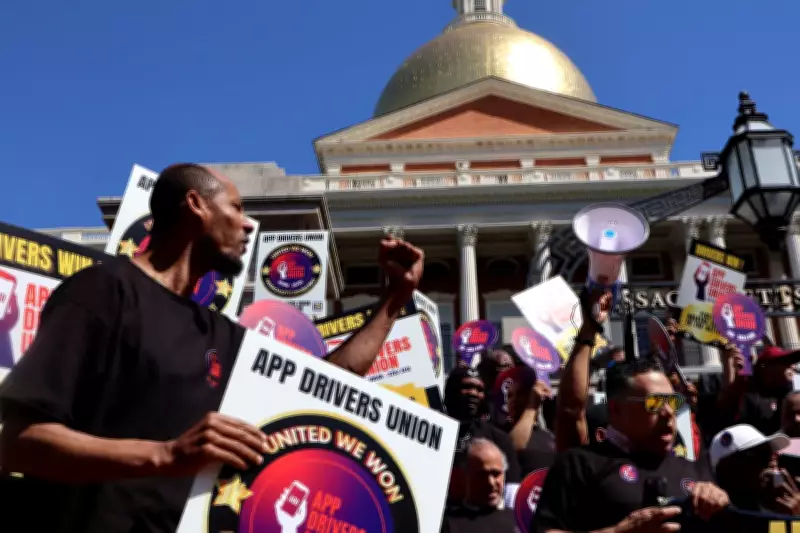
Members of the App Drivers Union held a rally outside the Massachusetts State House after the announcement that it had become the first certified union of rideshare drivers in the nation, on Tuesday, May 26, 2026, in Boston. The union represents Uber and Lyft drivers across the state, marking a historic milestone in the gig economy.
Union Certification Details
The App Drivers Union received official certification from the Massachusetts Department of Labor Relations, making it the first statewide union for ride-hailing drivers in the United States. This certification allows the union to collectively bargain on behalf of drivers regarding wages, benefits, and working conditions. The move comes amid growing concerns about automation and the potential for job displacement as companies invest in self-driving vehicle technology.
Driver Reactions and Expectations
Drivers expressed relief and optimism about the union's formation. Many cited the need for better pay, health insurance, and protection against unfair deactivations. The union aims to negotiate a contract that addresses these issues and provides a voice for drivers in decisions about the future of the industry, including the introduction of autonomous vehicles.

Industry and Legal Context
Massachusetts has been at the forefront of efforts to regulate ride-hailing companies. In 2024, the state passed a law allowing drivers to unionize, which paved the way for this certification. Uber and Lyft have opposed unionization efforts in the past, arguing that drivers are independent contractors rather than employees. However, the new law and certification could set a precedent for other states.
Implications for the Gig Economy
The formation of the union is seen as a significant development for gig workers nationwide. It could inspire similar efforts in other states and industries, challenging the traditional classification of gig workers as independent contractors. The union's success may also influence how companies approach automation and worker displacement.
As the ride-hailing industry evolves, the union will play a crucial role in ensuring that drivers' interests are represented. The certification is a step toward greater worker rights in the digital age, with potential ripple effects across the broader economy.