The ongoing conflict in the Middle East, which has severely disrupted liquefied natural gas production in Qatar, is reshaping global energy dynamics and placing renewed focus on LNG Canada's Phase 2 expansion project in Kitimat, British Columbia. Analysts suggest that the supply losses from the Persian Gulf have likely accelerated decision-making timelines for the Canadian project, even as the company maintains a cautious public stance.
Pipeline Agreement Sparks Speculation
Speculation about a potential final investment decision intensified recently when LNG Canada and TC Energy Corp., operator of the Coastal GasLink pipeline, announced an agreement to collaborate on doubling the pipeline's capacity. This development allows for continued front-end engineering work as the joint venture explores pathways toward a possible Phase 2 expansion.
The expansion would involve constructing additional compressor stations along the 670-kilometre pipeline stretching from northeastern British Columbia to the liquefaction plant in Kitimat. This upgrade would boost the pipeline's capacity to five billion cubic feet of natural gas per day, positioning it as a critical infrastructure component for future LNG exports.

Middle East Conflict Reshapes Market Expectations
According to Alex Munton, an analyst with Houston-based Rapidan Energy Group, the war in the Middle East has fundamentally altered market expectations regarding global LNG supply. "Everything that's happened the past two weeks certainly puts LNG Canada's Phase 2, it pushes it to the front of the queue," Munton stated, highlighting how recent events have created unexpected urgency.
Munton noted that while the pipeline agreement might have been in development independently, its timing coincides with what he describes as "the biggest energy crisis in modern history." The conflict has not only disrupted current production but has also cast uncertainty over Qatar's massive multi-billion-dollar expansion project, which shares some partners with the LNG Canada joint venture.
Qatar Production Losses Create Supply Gap
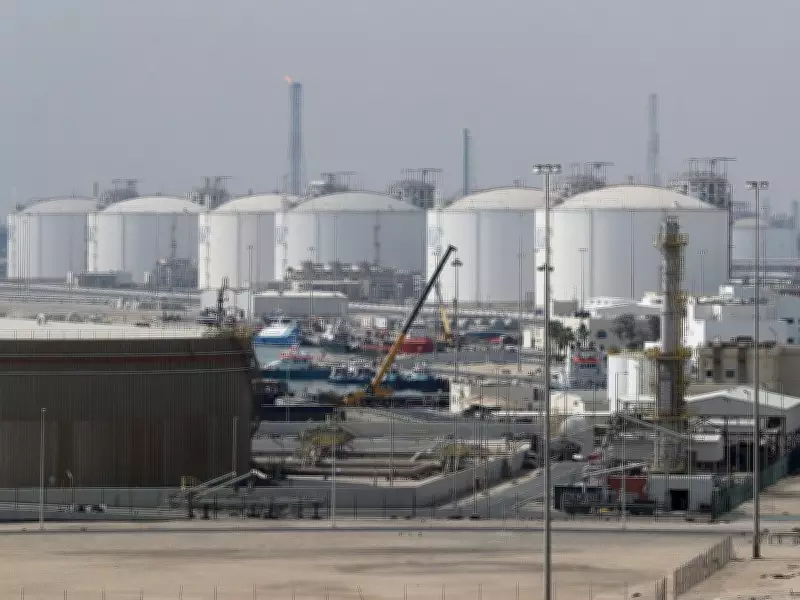
Iranian strikes on QatarEnergy's facilities have knocked out two LNG production trains, resulting in the loss of approximately 12.8 million tonnes of annual output for up to five years. This significant reduction in Persian Gulf supply comes at a time when the global LNG market was previously heading toward a potential glut, which had placed decisions about projects like LNG Canada Phase 2 on the back-burner.
Before the Middle East conflict, project backers were considering a decision window that would bring new production online in the mid-2030s. Now, with Qatar's expansion plans looking increasingly uncertain and immediate production losses creating supply gaps, LNG Canada's Phase 2 represents one of the few large-scale projects that is already engineered, designed, and permitted for development.
Accelerated Decision-Making Expected
Munton believes these developments "will certainly accelerate discussions around Phase 2" as global energy buyers seek reliable alternatives to Middle Eastern supply. The project's advanced stage of preparation gives it a competitive advantage in a market suddenly facing uncertainty and supply constraints.
The combination of immediate production losses in Qatar, uncertainty about future expansion in the Persian Gulf, and LNG Canada's readiness to proceed creates what analysts see as a perfect storm of circumstances that could fast-track decision-making for the Canadian project. As global energy security concerns intensify, LNG Canada Phase 2 has emerged from relative obscurity to become a focal point in discussions about future LNG supply diversification.