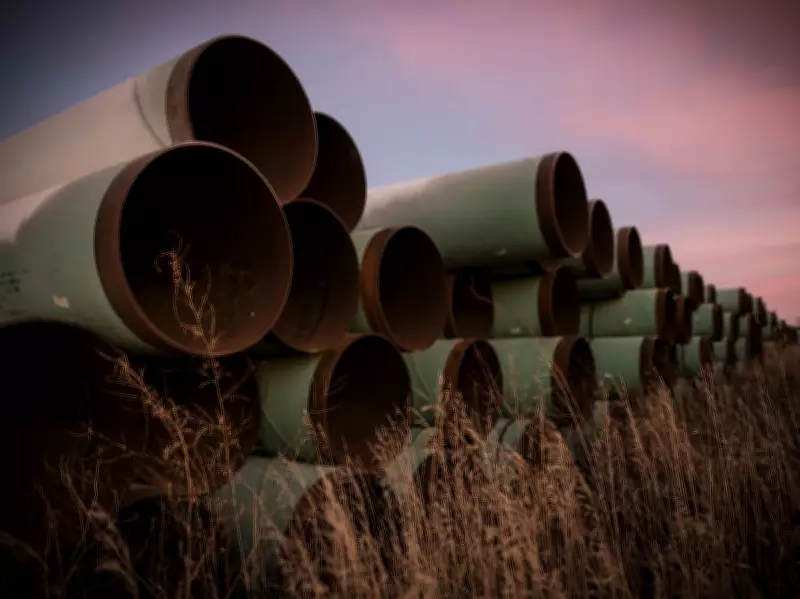
Keystone XL was supposed to be dead. After years of political fights, legal challenges and environmental opposition, then-United States president Joe Biden revoked the cross-border permit for the pipeline in 2021. TC Energy later cancelled the project, ending what became one of the most controversial energy proposals in North America.
Now, the idea is back — sort of. U.S. President Donald Trump has signed a presidential permit allowing Bridger Pipeline Expansion LLC to build and operate cross-border facilities at the Canada-U.S. boundary in Phillips County, Montana. The project is not Keystone XL under the same name, but it could use some of the same Canadian infrastructure and serve a similar purpose: moving more Alberta crude into the U.S. system.
Revived Pipeline Project Details
On the Canadian side, South Bow Corp., the TC Energy spinoff that now owns Keystone-related assets, is evaluating a project called Prairie Connector. That line could move crude from Hardisty, Alberta, to the U.S. border. From there, Bridger's proposed route would run through Montana to Guernsey, Wyoming. From Guernsey, Canadian crude could be connected into the broader U.S. pipeline network, which stretches through Cushing, Oklahoma, and eventually to the Gulf Coast, where many refineries can process heavy crude.

Implications for Alberta and Canada
For Alberta, the appeal is clear. More pipeline space means fewer bottlenecks, more options for producers and potentially stronger prices for Canadian oil. It could also help Canada present itself as a more reliable supplier to the U.S. However, this is not the West Coast pipeline Alberta has also been pushing for. It would deepen the country's dependence on the U.S. market, not diversify exports.
The project also is not a done deal. It still needs permits, customer commitments and a final investment decision. Critics argue that reviving a Keystone-like pipeline ignores lessons from the past, while supporters see it as a necessary step for energy security.