Making a living on the farm is always a bit of a gamble, says southern Alberta farmer Glen Gateman. This year, thanks to higher costs for inputs such as fuel and fertilizer, is already proving to be no different as farmers plant their crops for the season.
“In this business, it’s not much different than going to Vegas,” said the 59-year-old, who farms in the Mossleigh and Blackie areas. “It’s just how it is, and you’ve got to be able to accept that.”
His fuel budget has been “thrown out of whack” this year, and while most farmers have some fuel stored, that’s not enough to get through a whole seeding season, he said. “You’ve just got to get them to deliver it and don’t ask the price, basically,” said Gateman. Everything seems to cost more these days, he added. “Nothing surprises you anymore when they tell you what a tire’s worth or what a part’s worth or what a bloody new piece of machinery is worth.”

However, on the other hand, grain prices have also gone up considerably since last fall, notes Gateman, although he’s unsure if his farm’s bottom line is going to be much different because expenses have risen just as fast. Still, Gateman says he’s “fairly” optimistic about how things will turn out this year. He says his farm is coming off a decent year in which prices were down but crop yields were up — at record highs in many fields. And his farm’s crops are being seeded into good soil moisture, said Gateman, whose farm got “very lucky” to get spring snowstorms after a dry winter.
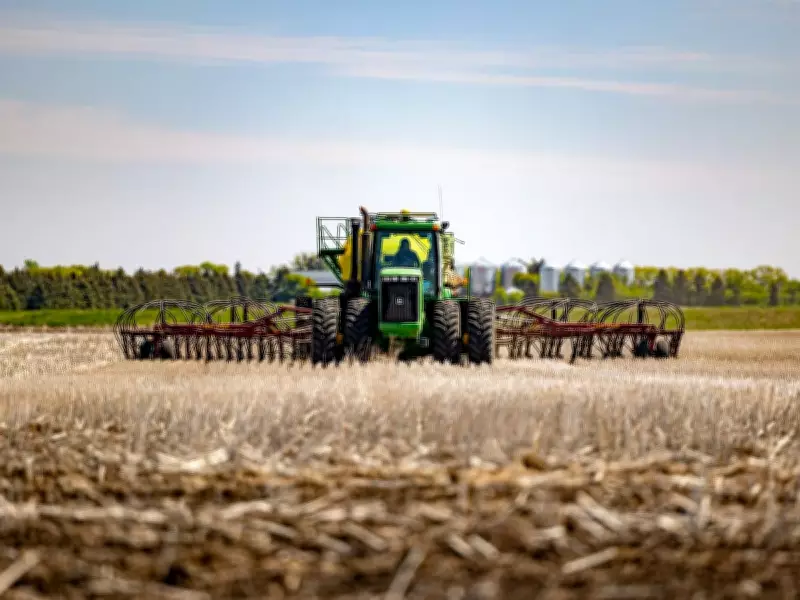
Due to all the snow his farm got in April, seeding started a little later this year than normal and is about half done, said Gateman, who also has a cow-calf operation. This year, the 2,200-hectare farm is seeding wheat, barley, and canola. “You just hope that we get some timely rains like we did last year and go from there,” said Gateman, who does wonder when the grain price bubble will burst.
Farm Credit Canada Senior Economist Leigh Anderson noted that nitrogen fertilizer has gone up between 30 and 40 per cent since the U.S.-Iran conflict broke out two and a half months ago, and farm fuel costs have jumped considerably during the busy seeding season. “We’re seeing definitely a lot of pressure at the farm level,” he said. Western Canadian crop margins are “relatively tight,” but some commodity prices, such as wheat, are trending upwards, said Anderson.
Danny Le Roy, a University of Lethbridge economics professor, said farmers’ decisions around what to spend money on to generate the largest amount of profit have become much more complicated by “interference” in the marketplace such as the U.S.-Iran conflict. “In every case, these commercial businesses are trying to figure out what the best way of marshalling these resources here and now in view of hopefully producing something at some time in the future that can be sold at a profit,” said Le Roy. Farmers manage the rising costs just like everyday Albertans do, forcing them to make difficult choices, said Le Roy. “Rather than a boneless ribeye steak, maybe it’s a flank steak, but it’s still meat. We sacrifice something on the margin.”