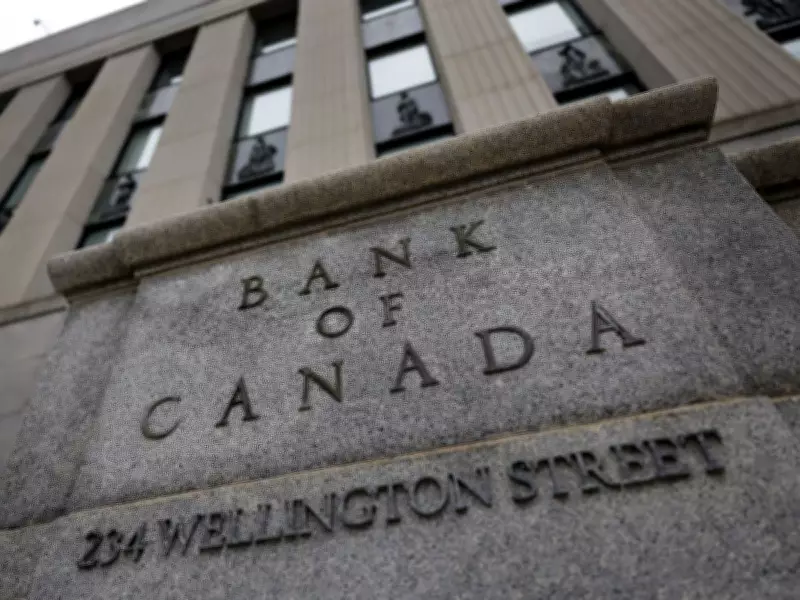
The Bank of Canada has identified the impacts of soaring oil prices and ongoing uncertainty surrounding United States tariffs as primary concerns for the nation's economic outlook. In a summary of deliberations released Wednesday, the central bank's governing council noted that these factors remain 'unusually elevated' risks.
Rate Decision and Economic Projections
The governing council decided to hold the key overnight rate at 2.25 percent for the fourth consecutive time. Members anticipated that oil prices would ease and that inflation had peaked at three percent in April 2026, before gradually returning to the two percent target in early 2027. Gross domestic product is expected to grow to 1.2 percent in 2026, rising to 1.6 percent in 2027 and 1.7 percent in 2028, driven by a gradual increase in exports and business investments.
Dependence on Oil Prices and Tariffs
However, the council emphasized that this scenario is highly dependent on the persistence of the oil price shock and whether the United States imposes additional tariffs on Canada. If energy prices remain high, inflation could rise further and stay elevated for longer, potentially requiring consecutive increases to the policy interest rate. Conversely, if the U.S. government imposes significant new trade restrictions, it could weaken economic activity and push inflation down, meaning the policy interest rate might need to be cut further.

“Governing Council agreed that their outlook for growth and inflation in Canada was highly conditional on U.S. tariffs remaining unchanged and on lower oil prices, which would depend on developments in the war in the Middle East,” the summary read.
Inflation and Economic Conditions
Core inflation has shown some downward momentum, even though higher oil prices pushed headline inflation to 2.4 percent in March. There is no evidence that higher prices are spreading more broadly to other goods and services. The economy is in a position of excess supply, meaning businesses are producing more than consumers are buying, and inflation has hovered around the two percent target since summer 2024. Combined with a soft labor market, this suggests businesses are less likely to pass higher costs to consumers.
Business Sentiment and Future Risks
Despite uncertainty surrounding the upcoming Canadian-U.S.-Mexico Agreement negotiations, businesses reported stronger expectations for sales growth and investment. They also expected the Iran war to raise costs but noted that soft demand limits their ability to fully pass on those costs. The central bank's first-quarter business outlook survey indicates improving business sentiment, returning to pre-tariff levels.
However, governing council members acknowledged that there could be less excess supply than expected, and businesses might pass on higher costs more rapidly, particularly at a time when Canadians are more sensitive to price hikes. The council concluded that while geopolitical tensions and the trade war informed their discussions, the overall impact could be more limited than initially feared.