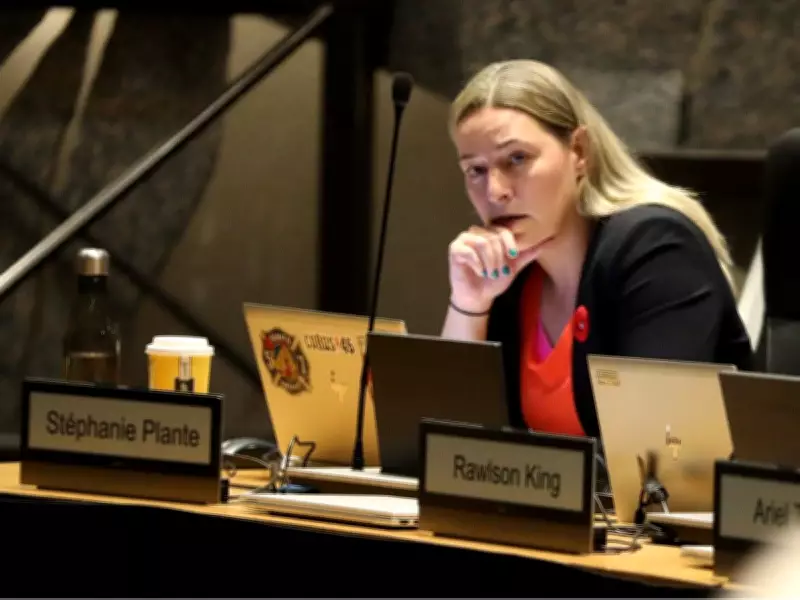
Rideau-Vanier Coun. Stéphanie Plante is urging the City of Ottawa to adopt wastewater testing as a tool to track drug use trends and identify dangerous substances in the local supply. The proposal will be presented to the full city council on May 27.
Wastewater surveillance for drugs pitched to Ottawa city council
Police reports, hospital data and self-reporting do not provide real-time information on emerging substances or toxic batches, Plante emphasized. Current surveillance methods are insufficient to keep up with the rapidly changing drug landscape.
During the COVID-19 pandemic, Ottawa's wastewater surveillance program, led by University of Ottawa engineering professor Rob Delatolla, proved highly effective in providing early warnings of incoming COVID-19 waves. The program was praised for its detailed insights and ability to inform public health decisions. However, the Province of Ontario discontinued the program in July 2024, citing duplication with a federal initiative. The City of Ottawa subsequently took over the program, which continues to monitor respiratory viruses and Mpox in wastewater.

Wastewater testing can also detect infectious diseases beyond COVID-19 and reveal trends in drug use. Plante highlighted that it can serve as an early warning system for dangerous contaminants in the drug supply. “Supervised consumption and harm reduction sites have historically provided critical drug check-in services and front-line intelligence about the local drug supply,” she said. “The closure or reduction of these services creates a gap in Ottawa’s ability to monitor toxic substances in circulation.”
Closing of harm reduction sites creates data gap
In March, Somerset Coun. Ariel Troster reported increased open drug use, more overdoses, and heightened calls for police and paramedics since a supervised consumption site at the Somerset West Community Health Centre was forced to close. Two other sites—one run by Ottawa Inner City Health and another by the Sandy Hill Community Health Centre—will lose their provincial funding in June.
Fentanyl and its analogues play a central role in the ongoing overdose crisis. Wastewater testing is reliable and anonymous, and it can be hyper-local, such as testing around homeless shelters, while also showing how drugs move across the city in real time. “Because—spoiler alert—overdoses are not just happening downtown,” Plante said in an interview.
Plante seeks dashboard for real-time data sharing
“I would like to make sure that there is some sort of dashboard and that our relevant partners can access it, whether it’s police, paramedics, emergency services, front-line workers. I’m really hopeful that people can see the benefit of this,” Plante said. “Drug dealers don’t make a consistent product. We want to be able to advise people who are working on the front lines about what they can expect on that day or that week.”
Plante now has two weeks to convince fellow councillors to support the initiative before it goes to council on May 27. The proposal aims to fill a critical gap in Ottawa’s ability to monitor toxic substances and respond to the overdose crisis effectively.