India Seeks Expanded Canadian Crude Oil Exports from West Coast, Energy Minister Reveals
Canada's strategic path to establishing itself as a global energy superpower is increasingly directed towards India, according to Energy Minister Tim Hodgson. In remarks made on Friday, Hodgson emphasized that Indian refiners are actively seeking greater access to Canadian crude oil, particularly through West Coast export routes. This development aligns with Ottawa's ambitious goal to approximately double bilateral trade with India's rapidly expanding economy by the year 2030.
India's Refining Capacity and Economic Advantages
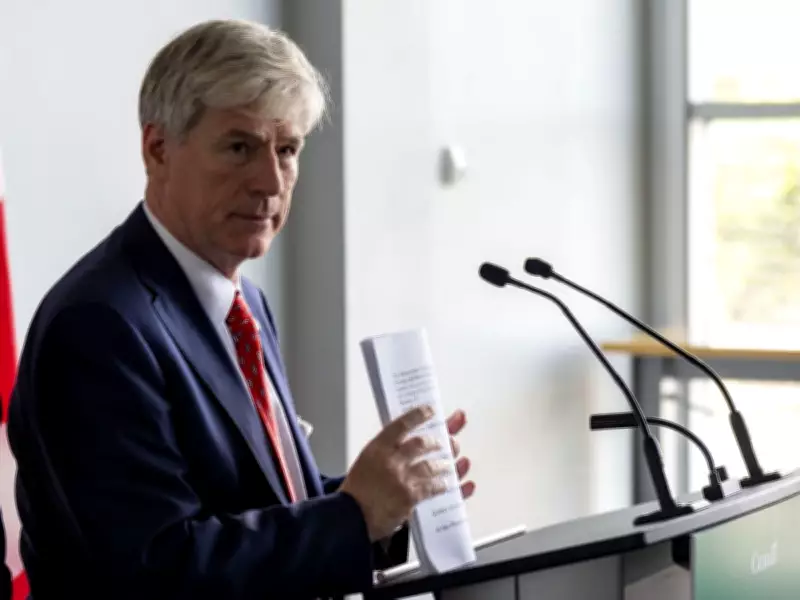
Minister Hodgson, speaking to reporters upon his return from high-level discussions with industry leaders and senior officials in Goa and New Delhi, highlighted India's position as the world's largest refining industry. "India has the largest refining industry in the world today, and they are actively taking Canadian crude off the Gulf Coast, because that's where they can get it in meaningful amounts today," Hodgson stated. He further explained that Indian officials expressed a strong preference for sourcing crude from Canada's West Coast due to significantly shorter shipping times, which substantially improves the economic viability for Indian buyers.
"They were very clear with me: they would love to be able to get it off our West Coast, which has significantly shorter shipping times, which means the economics for them are much better," Hodgson elaborated. This interest extends to potential expansions of existing infrastructure, such as the Trans Mountain pipeline system, or the development of new pipeline projects championed by Alberta as a proponent.

Revitalized Trade Talks and Energy Cooperation
The discussions mark a significant "refresh" in the bilateral relationship between Canada and India, which recorded approximately $23 billion in two-way trade during 2024. Hodgson noted that the two nations have formally agreed to enhance cooperation in the energy sector and on critical minerals. This initiative follows the Carney government's efforts to revive previously stalled trade negotiations, which had been hampered by diplomatic and security tensions in recent years.
"We are putting what the prime minister said in Davos into action," Hodgson remarked, referencing a speech that outlined a forward-looking strategy focused on building new supply chains with responsible partners committed to multilateralism and free trade principles. "We're in a world where we are seeing economic integration be used by some countries as a force for coercion and tariffs as a force for leverage," he added, underscoring the importance of stable trade relationships.
Market Potential and Infrastructure Considerations
Experts suggest that increased oil and gas exports to India could be central to Canada's broader strategy to diversify its energy markets and reduce reliance on the United States. Hodgson pointed out that India's energy consumption is projected to more than double by 2040, positioning it as a highly desirable long-term market for Canadian energy products, including:
- Conventional crude oil
- Liquefied natural gas (LNG)
- Liquefied petroleum gas (LPG) products such as propane and butane
Currently, Canada produces roughly five to six percent of the world's oil but sells less than one percent of its production to India, indicating substantial room for growth. "There's a real opportunity," Hodgson asserted, noting that Indian refineries are actively seeking new sources of raw material feedstock amid global market shifts, including steep U.S. tariffs on imports of Russian oil.
Pipeline Route Debates and Provincial Perspectives
The push for expanded exports comes amidst ongoing debates over pipeline infrastructure. Alberta Premier Danielle Smith recently ruled out Kitimat, British Columbia, as a potential terminus for a proposed new oil pipeline, citing complexity and navigational challenges for tankers, concerns echoed by coastal First Nations groups. Smith has previously suggested that the Port of Prince Rupert on B.C.'s northwest coast might offer a safer alternative for new pipeline routes.

In his comments, Minister Hodgson refrained from committing Ottawa to specific infrastructure projects and declined to comment on potential pipeline routes, stating, "The route will be decided by the proponent. The proponent is Alberta." This underscores the collaborative yet provincially led approach to energy infrastructure development in Canada.
Overall, the renewed focus on energy trade with India represents a pivotal opportunity for Canada to strengthen its economic ties and solidify its role in the global energy landscape, driven by mutual interests in secure and efficient supply chains.