The Right Chemistry: How Oil's Molecules Power Modern Civilization
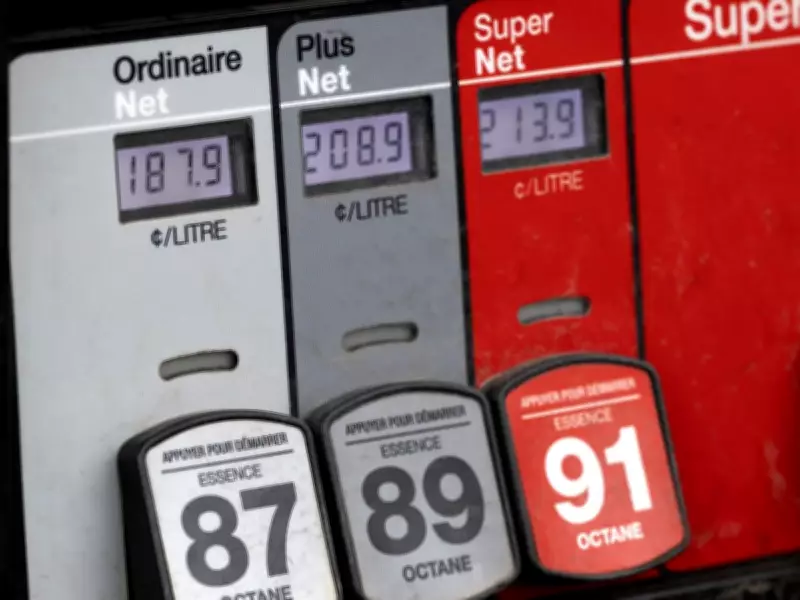
Disruptions in global oil supplies caused by the ongoing conflict in Iran are being felt directly at gas pumps worldwide, serving as a stark reminder of our society's profound dependence on petroleum. This dependence extends far beyond fueling vehicles, reaching into nearly every aspect of modern life.
A Personal Awakening to Oil's Importance
My first inkling of oil's significance came in 1962 while watching an episode of The Beverly Hillbillies. The show's iconic theme song told the story of Jed Clampett, a poor mountaineer who struck it rich when "up through the ground came a-bubblin' crude." At the time, I wondered why discovering a thick black fluid could make someone an instant millionaire. The answer became clear years later during my organic chemistry studies, when I realized the world literally runs on oil.
Beyond Transportation: The Chemical Backbone of Society
While oil's role in powering cars, ships, and planes is well-known, its chemical importance is even more fundamental. Petroleum serves as the primary source for countless essential products. Through various refining and chemical processes, oil derivatives become pharmaceuticals that treat diseases, synthetic fibers for clothing, durable plastics, effective detergents, cosmetics, industrial adhesives, specialized lubricants, paints, roofing materials, and asphalt for roads. Without these petroleum-based products, modern civilization as we know it would grind to a complete halt.

Clarifying Terminology: Petroleum vs. Oil
Although often used interchangeably, "petroleum" and "oil" are distinct terms. Petroleum formed millions of years ago when microscopic algae, zooplankton, and bacteria—not dinosaurs—died and settled on ancient sea floors. Buried under layers of sand and mud in oxygen-deprived environments, these organisms transformed under immense pressure and heat into complex mixtures of hydrocarbons—molecules composed solely of carbon and hydrogen atoms.
Being lighter than water, this mixture migrated upward through porous sedimentary rock until trapped beneath impermeable rock layers, creating petroleum reservoirs. The term itself derives from Latin: "petra" meaning rock and "oleum" meaning oil. Within this petroleum reservoir, "crude oil" represents the liquid hydrocarbon fraction, while petroleum also contains heavier tar-like substances and lighter components known as natural gas.
Ancient Applications and Early Refinement
Humanity's relationship with petroleum stretches back millennia. Natural seepages occurred where impermeable rock layers cracked, allowing petroleum to reach the surface. As lighter components evaporated, they left behind thick, viscous bitumen—historically called pitch. Ancient Mesopotamians discovered this substance around 5,000 years ago, while Babylonians used it to waterproof buildings and boats.
Historical records reveal diverse early applications: Ancient Egyptians employed pitch in mummification processes, biblical accounts describe Noah coating his ark with pitch for waterproofing, and Exodus mentions Moses' mother using tar and pitch to seal a papyrus basket. Archaeologists have even discovered naturally occurring tar used to pave streets in ancient Baghdad.
Around 1000 BCE, Chinese innovators drilled bamboo poles fitted with metal bits to extract oil and natural gas, which they ignited to evaporate seawater for salt collection. By the 10th century, extensive bamboo pipeline networks connected gas wells with salt springs across China. Persian chemists meanwhile developed distillation techniques to isolate flammable petroleum components for warfare and medicinal distillates.
The Birth of Modern Refining
The 18th century saw Russia's first oil refinery under Empress Elizabeth, producing "rock oil" fractions for church and monastery lamps, though this technology remained largely isolated. The modern petroleum industry truly began in the 1840s with Nova Scotia-born physician and geologist Abraham Gesner. Experimenting with bitumen samples, Gesner discovered that heating produced a fraction boiling between 150-275°C that burned cleaner and brighter than commonly used whale oil, without developing rancidity.

Gesner initially called his product "keroselain" from Greek words for wax and oil, later shortened to kerosene. This discovery ultimately doomed the whale oil industry. The search for efficient kerosene production led Edwin Drake to drill Pennsylvania's first successful oil well in 1859 at Titusville, where natural petroleum seepages had been observed.
The Automotive Revolution and Chemical Transformation
Initially, only kerosene held commercial value. This changed dramatically in 1885 when German engineer Karl Benz created the first practical gasoline-powered automobile. Suddenly, gasoline became petroleum's most valuable fraction, driving refinery innovation. Massive fractionating columns were developed to separate petroleum into natural gas, gasoline, diesel, fuel oil, lubricating oil, and asphalt residue based on differing boiling points. Catalytic cracking processes further broke heavier fractions into more valuable gasoline.
Meanwhile, 19th-century chemists demonstrated that petroleum and coal tar distillates could be chemically transformed into dyes and pharmaceuticals. This chemical versatility expanded enormously with 20th-century innovations: the 1906 invention of Bakelite (the first synthetic plastic) and 1930s development of nylon, both requiring petroleum components for production.
Our Inescapable Dependence
Today, oil's centrality is undeniable. Beyond transportation fuels, petroleum derivatives form the chemical foundation for plastics, pharmaceuticals, fertilizers, heating oils, and countless consumer goods. This explains why "black gold" transformed Jed Clampett into a millionaire in popular culture—and why geopolitical conflicts like the war in Iran create such widespread economic turmoil. Our civilization's intricate chemical dependency on petroleum makes supply disruptions felt across every sector of society, from manufacturing to medicine, highlighting the urgent need for both energy security and sustainable alternatives.