OTTAWA — Prime Minister Mark Carney expressed concern over the challenges facing Canada's auto industry after Honda, a major Japanese automaker, scrapped its plans for a $15-billion electric vehicle (EV) plant north of Toronto.
Speaking to reporters outside his party's weekly caucus meeting on Parliament Hill, Carney noted that the industry remains under pressure from what he described as unjustified tariffs stemming from U.S. President Donald Trump's trade war.
"Obviously there are challenges with the unjustified tariffs in the auto sector," Carney said. "We'll continue to work with companies in the sector, helping them reposition, reinvest, supporting workers there and continue to do what's necessary, including getting the right deal in Canada's interest."

Honda hits brakes on EV plant
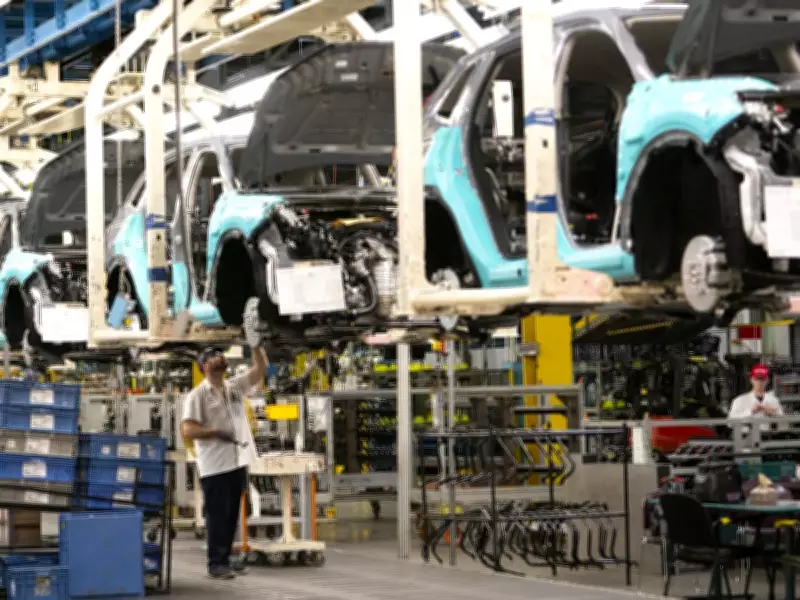
News broke on Wednesday that Tokyo-based Honda decided to cancel plans to construct a "historic" $15-billion EV plant and battery manufacturing hub alongside its existing assembly plant in Alliston. This decision came roughly a year after Honda had already postponed the project by two years. The plant was originally slated to open in 2028.
The announcement followed Honda's company-wide pivot away from EVs toward hybrids for the North American market, citing both tariff pressures and sluggish demand for fully electric vehicles. Site preparation for the Alliston plant had already commenced.
Additionally, Honda announced last May that some production of its popular CR-V model would shift away from its global production base in Alliston to plants in the United States, a direct response to Trump's tariffs. Honda also assembles the CR-V in Indiana and Ohio, with the latter seeing most of the work moved from Canada.
Political reactions
Conservative Finance Critic Adam Chambers told reporters the news represents a further indictment of the Carney Liberals' auto industry policy. "They bet big on electric vehicles, they put subsidies in the window to lure companies to suggest they would build electric vehicles here, and that ended up causing some of the OEMs here to move traditional vehicle production outside of Canada and to the US to make room to make electric vehicles here," he said. "Now the market isn't quite where it is, and this is a direct result of the government's big bet on electric vehicles — and instead of rethinking their entire policy, they are doubling down."
Plant latest shift away from EV projects
Numerous EV-related projects in Canada, widely lauded at the time by industry officials and politicians, have been scaled back or cancelled outright over the past few years. In September 2025, a planned $7-billion Northvolt "gigafactory" building EV batteries was scuttled after its parent company filed for bankruptcy in Sweden, prompting the Quebec government to write off nearly $270 million in investments.
In July 2024, an EV production line at the Ford Oakville plant was cancelled, with the space repurposed to expand production of gas-powered F-series pickup trucks. Several months later, Umicore, reacting to a sharp decrease in demand, cancelled a $2.7-billion battery cathode plant near Kingston.